

Jharonne Martis
- GLP-1s are evolving from a pharmaceutical growth story into a broader consumer story. The rise of prescription weight-loss drugs is coinciding with a widening divergence in apparel search behaviour, promotional activity and sold-out rates across size groups and genders.
- Search and pricing data suggests demand is shifting across apparel categories as consumer preferences and purchasing behaviour evolve, and GLP-1 usage rates alongside company commentary may help to explain emerging trends.
The growth of GLP-1s
Exhibit 1: Eli Lilly GLP-1 Revenue - Mounjaro and Zepbound
That growth trajectory is spurring positive analyst signals, according to LSEG data. Eli Lilly scores 94 out of 100 on the StarMine Analyst Revisions Model, placing it in the top decile and reflecting positive changes in sell-side analyst estimates. Buy-side institutional sentiment is also favourable: Lilly has a StarMine Smart Holdings score of 79, implying relatively constructive positioning among institutional investors.
With the magnitude of the growth from companies like Eli Lilly, industries well beyond healthcare are paying attention. As GLP-1 adoption has expanded, its potential effects are increasingly being examined across the broader consumer economy. Apparel is one area where those effects may be starting to emerge, where changing body sizes can affect search behaviour, product demand, markdowns and wardrobe replacement.
Search trends reveal shifts in apparel demand
While GLP-1 adoption has accelerated, consumer interest in plus-size apparel has shifted as well. In collaboration with Centric Market Intelligence, LSEG found that online search interest across several plus-size apparel categories has declined. Searches for plus-size dresses are down 5% from a year ago and 19% from two years ago. Non-plus-size apparel, on the other hand, has experienced an increase in online search interest across several categories.
Exhibit 2: Online search interest - plus-size apparel
While the data does not explicitly establish GLP-1 use as the cause, the shift coincides with a period of rapidly increasing GLP-1 adoption and warrants a closer look at whether similar patterns are emerging in apparel pricing and promotions.
Pricing strategies and company commentary gives weight to the story
One of the clearest signs of changing apparel demand is emerging in pricing data. Centric Market Intelligence pricing data shows that retailers are relying more heavily on promotions in women's plus-size apparel. Discount penetration, defined as the share of merchandise offered on sale, increased from 38% in 2023 to 49% in 2026 year-to-date. Core women's apparel, by contrast, has remained below the long-term industry average. The widening gap suggests retailers are working harder to stimulate demand in plus-size categories, even as consumer preferences and shopping patterns evolve.
The picture looks different in men's apparel. While discounting has increased for Big & Tall merchandise, promotional activity has risen even more sharply in core men's apparel. Big & Tall discount penetration increased from 22% in 2023 to 30% in 2026 year-to-date, but core men's apparel jumped to 40% in 2026 year-to-date, moving above the long-term apparel average. Rather than a uniform shift across all size categories, the data points to distinct demand dynamics emerging within different consumer groups.
Exhibit 3: Women's vs men's apparel discount penetration
A possible explanation lies in the differing rates of GLP-1 adoption among men and women: according to Ipsos, 16% of women report having used a GLP-1 medication, compared with 9% of men.
Online search interest has declined across several plus-size categories, while interest in certain non-plus categories, including skirts, dresses and swimsuits, has strengthened. At the same time, women's plus-size apparel has become increasingly promotional, with a greater share of merchandise offered on sale. Yet demand remains resilient: plus-size activewear continues to post relatively strong sold-out rates, suggesting that promotions, alongside growing consumer interest in fitness, weight loss and healthier lifestyles, may be helping support sell-through.
While the apparel data does not establish a direct causal link, the contrast is notable, and it is backed by commentary from retailers suggesting that GLP-1s are beginning to influence consumer behaviour beyond healthcare. LSEG Workspace earnings call transcripts and summaries suggest that management teams are increasingly discussing changes in sizing, shopping patterns and product demand, with one apparel retailer describing GLP-1 adoption as a structural shift in its customer base.
A changing consumer landscape
As GLP-1 use continues to grow, retailers may be getting an early indication of how a healthcare trend can ripple through the broader consumer economy, influencing demand patterns, pricing strategies and the way apparel assortments are planned across different customer segments. While the long-term effects remain uncertain, the data suggests that GLP-1s may become a key consumer behaviour trend to watch in the years ahead.
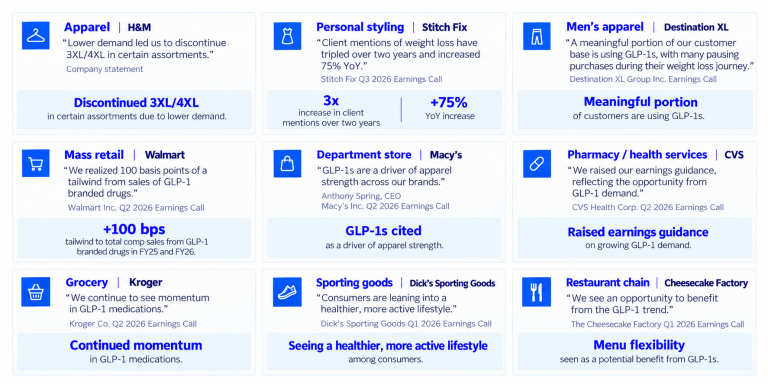
Exhibit 4: Retailers and restaurants say GLP-1s are influencing consumer behaviour
From apparel to grocery, pharmacy and dining, companies across the consumer landscape say GLP-1 medications are already shaping how – and what – consumers shop, eat and wear.
Source: LSEG Workspace was used to pull transcripts and company filings, 2026 - 2027. Quotes are excerpted and may be shortened for clarity.
| Industry | Company | Quote | Summary |
|---|---|---|---|
| Apparel | H&M | "Lower demand led us to discontinue 3XL/4XL in certain assortments." – Company statement | Discontinued 3XL/4XL in certain assortments due to lower demand. |
| Personal styling | Stitch Fix | "Client mentions of weight loss in Fix request notes have tripled over two years and increased 75% YoY." – Stitch Fix Q3 2026 Earnings Call | 3x increase in client mentions over two years; 75% YoY increase. |
| Men's apparel | Destination XL | "A meaningful portion of our customer base is currently using GLP-1 medications... while they are on their weight loss journey, they stopped buying apparel altogether for a period. But a majority tell us that they intend to come back to DXL once they reach a stable size." – Destination XL Group Inc. Earnings Call | Meaningful portion of customers are using GLP-1s, with many pausing purchases during their weight loss journey. |
| Mass retail | Walmart | "When looking at the Walmart U.S. total comps, including health and wellness, we realized 100 basis points of a tailwind from sales of GLP-1 branded drugs." – Walmart Inc. Q2 2026 Earnings Call | +100 bps tailwind to total comp sales from GLP-1 branded drugs in FY25 and FY26. |
| Department store | Macy's | "We're seeing the apparel business strong at both Macy's and Bloomingdale's. You can say GLP-1s are a driver of that, and I would argue that fashion within all the brands and across both nameplates is a driver of that." – Anthony Spring, CEO; Macy's Inc Q2 2026 Earnings Call | GLP-1s cited as a driver of apparel strength, alongside return to work and fashion trends. |
| Pharmacy / Health Services | CVS | "As demand for these therapies continues to grow, consumers are increasingly focused on three things: affordability, access and convenience. We raised our earnings guidance, reflecting the opportunity from GLP-1 demand." – CVS Health Corp. Q2 2026 Earnings Call | Raised earnings guidance and cited growing GLP-1 demand, with a focus on affordability, access and convenience. |
| Grocery | Kroger | "We continue to see continued momentum in GLP-1 medications." – Kroger Co. Q2 2026 Earnings Call | Continued momentum in GLP-1 medications. |
| Sporting Goods | Dick's Sporting Goods | "We don't have specific data on that, but we've been seeing people leaning in... to a healthier active lifestyle, outdoor-living, team sports, golf. So in general, our consumer is doing really well, but we don't have any specific correlation to GLP-1s." – Dick's Sporting Goods Q1 2026 Earnings Call | Seeing a healthier, more active lifestyle among consumers, though no specific data on GLP-1 impact. |
| Restaurant Chain | Cheesecake Factory | "I think that there's a piece of that. I think the flexibility of the menu, particularly at Cheesecake Factory and Flower Child, will benefit us with a tail here in the whole GLP-1 thing, right?" – The Cheesecake Factory Q1 2026 Earnings Call | Menu flexibility seen as a potential benefit from the GLP-1 trend. |

Read more about

Legal Disclaimer
Republication or redistribution of LSE Group content is prohibited without our prior written consent.
The content of this publication is for informational purposes only and has no legal effect, does not form part of any contract, does not, and does not seek to constitute advice of any nature and no reliance should be placed upon statements contained herein. Whilst reasonable efforts have been taken to ensure that the contents of this publication are accurate and reliable, LSE Group does not guarantee that this document is free from errors or omissions; therefore, you may not rely upon the content of this document under any circumstances and you should seek your own independent legal, investment, tax and other advice. Neither We nor our affiliates shall be liable for any errors, inaccuracies or delays in the publication or any other content, or for any actions taken by you in reliance thereon.
Copyright © 2026 London Stock Exchange Group. All rights reserved.
The content of this publication is provided by London Stock Exchange Group plc, its applicable group undertakings and/or its affiliates or licensors (the “LSE Group” or “We”) exclusively.
Neither We nor our affiliates guarantee the accuracy of or endorse the views or opinions given by any third party content provider, advertiser, sponsor or other user. We may link to, reference, or promote websites, applications and/or services from third parties. You agree that We are not responsible for, and do not control such non-LSE Group websites, applications or services.
The content of this publication is for informational purposes only. All information and data contained in this publication is obtained by LSE Group from sources believed by it to be accurate and reliable. Because of the possibility of human and mechanical error as well as other factors, however, such information and data are provided "as is" without warranty of any kind. You understand and agree that this publication does not, and does not seek to, constitute advice of any nature. You may not rely upon the content of this document under any circumstances and should seek your own independent legal, tax or investment advice or opinion regarding the suitability, value or profitability of any particular security, portfolio or investment strategy. Neither We nor our affiliates shall be liable for any errors, inaccuracies or delays in the publication or any other content, or for any actions taken by you in reliance thereon. You expressly agree that your use of the publication and its content is at your sole risk.
To the fullest extent permitted by applicable law, LSE Group, expressly disclaims any representation or warranties, express or implied, including, without limitation, any representations or warranties of performance, merchantability, fitness for a particular purpose, accuracy, completeness, reliability and non-infringement. LSE Group, its subsidiaries, its affiliates and their respective shareholders, directors, officers employees, agents, advertisers, content providers and licensors (collectively referred to as the “LSE Group Parties”) disclaim all responsibility for any loss, liability or damage of any kind resulting from or related to access, use or the unavailability of the publication (or any part of it); and none of the LSE Group Parties will be liable (jointly or severally) to you for any direct, indirect, consequential, special, incidental, punitive or exemplary damages, howsoever arising, even if any member of the LSE Group Parties are advised in advance of the possibility of such damages or could have foreseen any such damages arising or resulting from the use of, or inability to use, the information contained in the publication. For the avoidance of doubt, the LSE Group Parties shall have no liability for any losses, claims, demands, actions, proceedings, damages, costs or expenses arising out of, or in any way connected with, the information contained in this document.
LSE Group is the owner of various intellectual property rights ("IPR”), including but not limited to, numerous trademarks that are used to identify, advertise, and promote LSE Group products, services and activities. Nothing contained herein should be construed as granting any licence or right to use any of the trademarks or any other LSE Group IPR for any purpose whatsoever without the written permission or applicable licence terms.