

Indrani De, CFA, PRM

Mark Barnes, PhD,
Introduction
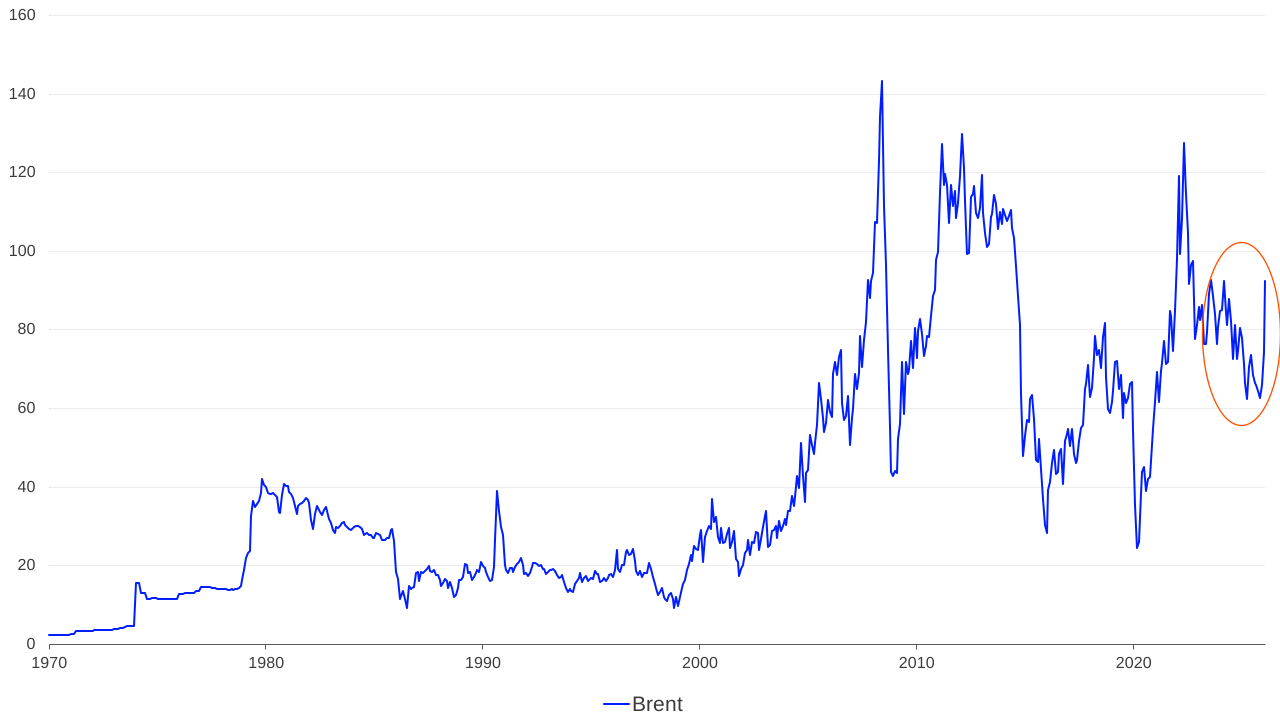
Exhibit 1: Brent oil price, USD / barrel
Source: FTSE Russell/LSEG, Data as of 9 March 2026. Past performance is no guarantee of future results. Please see the end for important legal disclosures.
While there has been considerable intraday volatility in March, the price move through March 9th resulted in a 43.2% percent jump in the price of oil since the crisis began, that would put this event fifth in the monthly percentage changes (see Exhibit 2). The events that saw larger price moves in percentage terms include the 1974 oil embargo shock, the 1986 oil collapse, the 1990 Gulf war, and the Covid global demand collapse. What is notable is that this relatively large macro shock has still had a fairly limited impact on global markets.
Exhibit 2: Top 10 monthly percentage changes in price of oil (Brent, USD)
| Date | Dollar Change | % Change |
|---|---|---|
| Jan 1974 | $ 10.90 | 237.0% |
| May 2020 | $ 15.05 | 76.6% |
| Aug 1986 | $ 5.60 | 60.2% |
| Sep 1990 | $ 12.50 | 47.1% |
| MTD 2026-03-09 | $ 31.88 | 43.2% |
| Mar 1999 | $ 4.47 | 42.1% |
| Aug 2000 | $ 9.80 | 38.8% |
| May 1979 | $ 9.10 | 38.5% |
| April 1961 | $ 0.90 | 35.3% |
| Aug 1990 | $ 6.87 | 34.9% |
Source: FTSE Russell/LSEG, Data as of 9 March 2026. Past performance is no guarantee of future results. Please see the end for important legal disclosures.
Market reaction
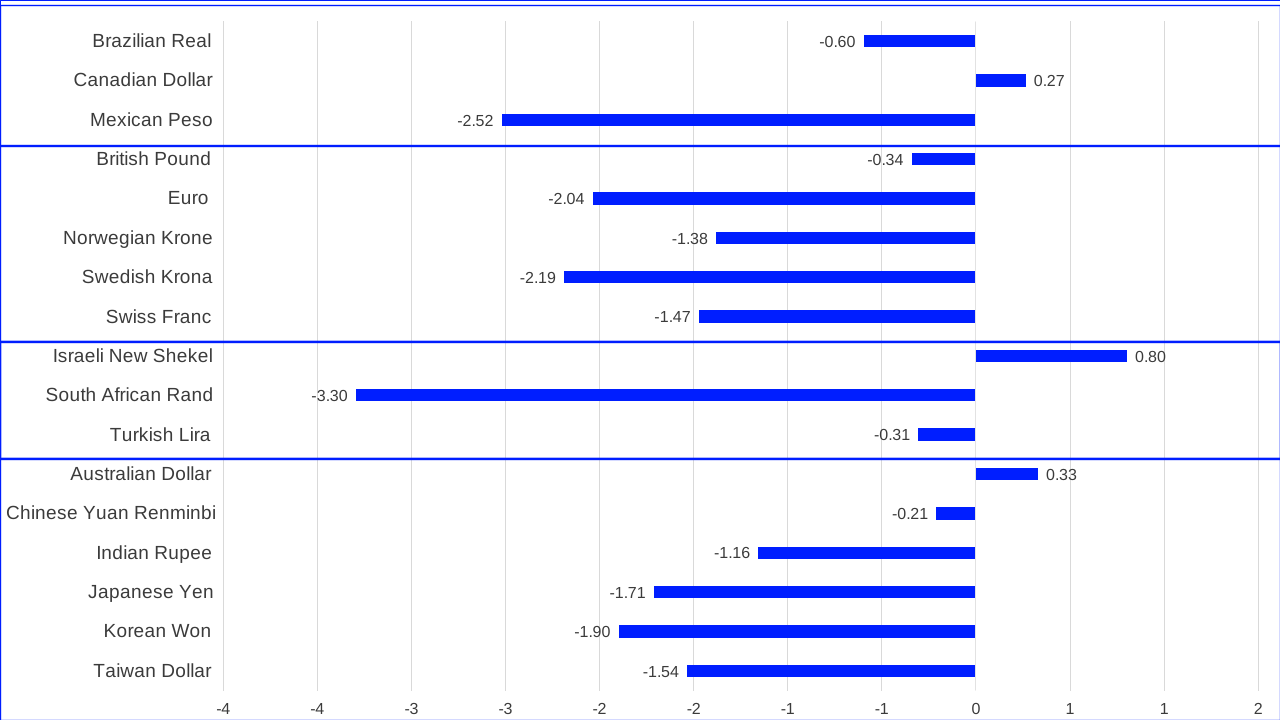
Along many dimensions, the market reaction has been fairly muted. Exhibit 3 shows that the US dollar has generally appreciated against other currencies, once again reclaiming its role as the safe-haven currency. One reason is that the US has been a net energy exporter since the shale oil revolution more than 10 years ago. This USD strength was true across regions and even vs non-Gulf oil-exporting countries. However, these currency moves have not been excessive.
Exhibit 3: Month-to-date currency returns relative to USD %
Source: FTSE Russell/LSEG, Data as of 11 March 2026. Past performance is no guarantee of future results. Please see the end for important legal disclosures.
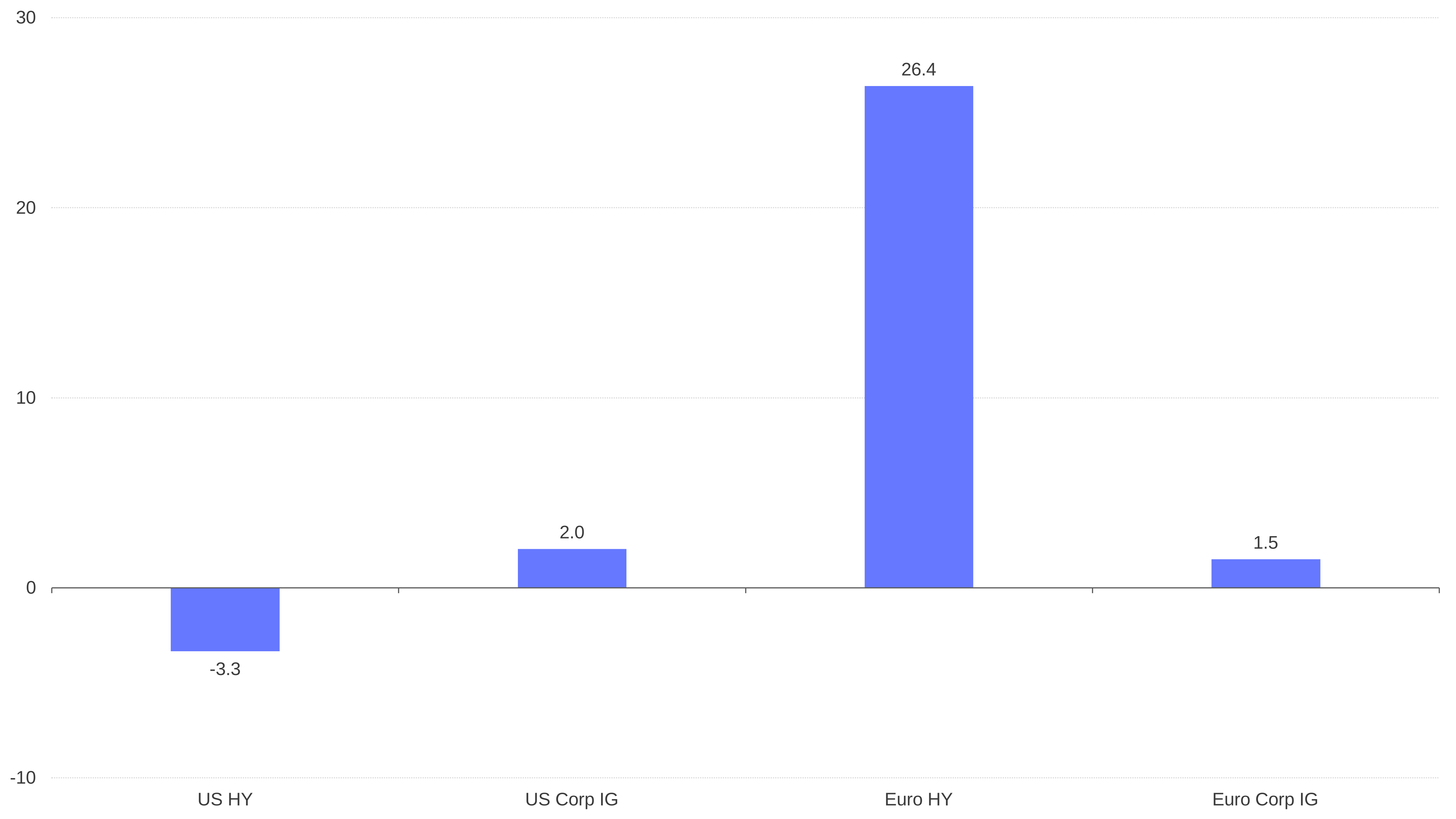
Looking at measures of risk, however, we start to see differentiation across markets based on exposure to the oil shock. Exhibit 4 shows that Investment Grade Option Adjusted Spreads (OAS) moved very little since the beginning of the month, but the High Yield OAS increased dramatically more in Europe than in the US, likely due to Europe’s higher exposure to the oil shipping bottleneck.
Exhibit 4: Month-to-date change in corporate option adjusted spread (basis points)
Source: FTSE Russell/LSEG, Data as of 11 March 2026. Past performance is no guarantee of future results. Please see the end for important legal disclosures.
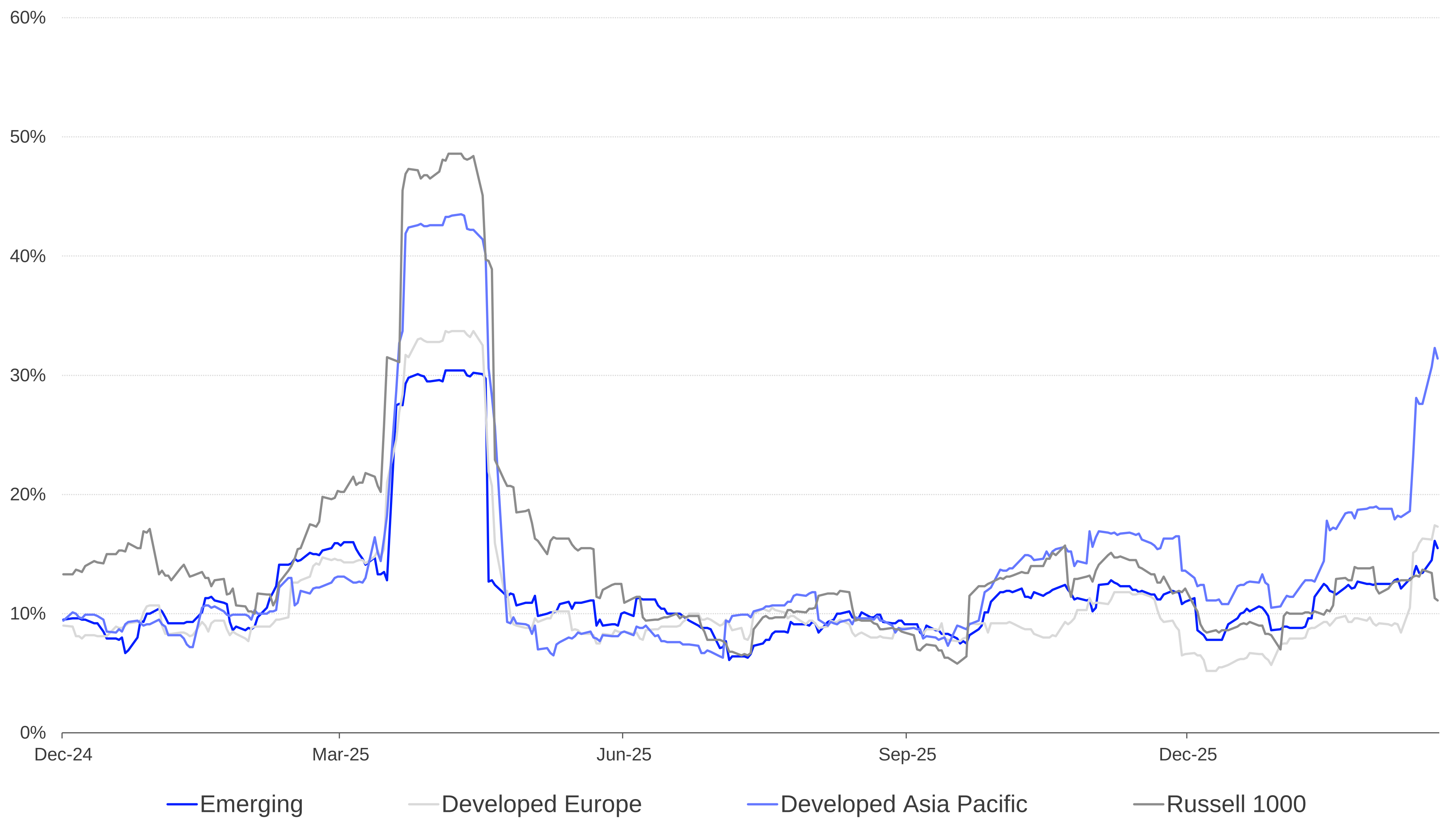
Similarly, the equity daily volatility shown in Exhibit 5 shows a jump in volatility for all regions, but it is higher in Asia Pacific (APAC) which has higher exposure to the disruption of shipping through the Strait of Hormuz. The volatility for the US Russell 1000 quickly dropped back below pre-crisis levels. All these moves are much smaller than the volatility spikes around the tariff announcements last year.
Exhibit 5: Annualized daily equity volatility (1-month window)
Source: FTSE Russell/LSEG, Data as of 11 March 2026. Past performance is no guarantee of future results. Please see the end for important legal disclosures.
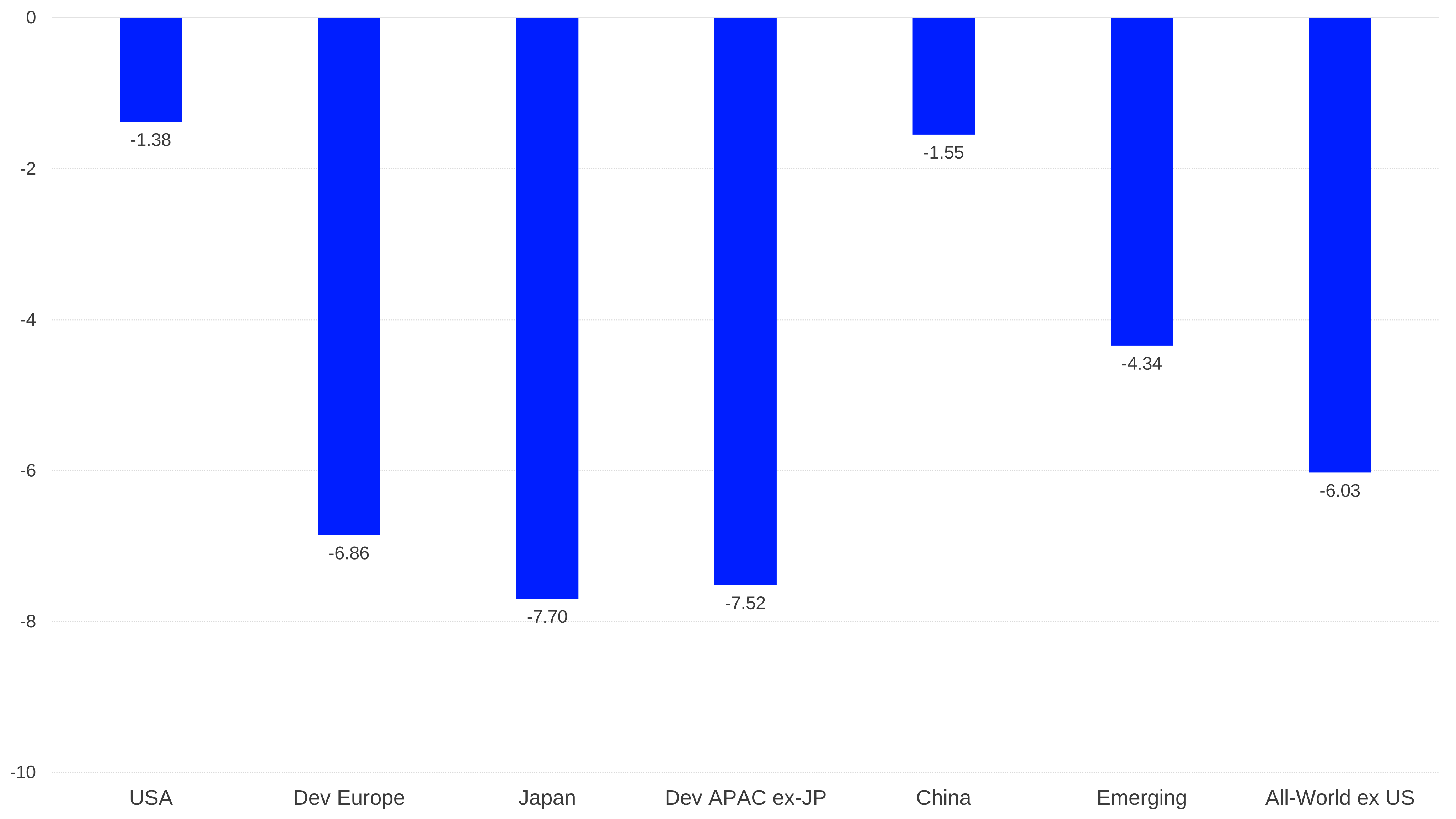
This pattern of weak market reaction is illustrated in Exhibit 6 which shows the FTSE USA equity index with the smallest drawdown at -1.38%, and Japan, APAC, and Europe with larger drops. As an energy exporter, the US is insulated from the oil price shock which has a much larger impact on Europe, Japan, and APAC, but even those regions have sold off less than 8% as of March 11.
Exhibit 6: Month-to-date equity regional index returns (%, USD)
Source: FTSE Russell/LSEG, Data as of 11 March 2026. Past performance is no guarantee of future results. Please see the end for important legal disclosures.
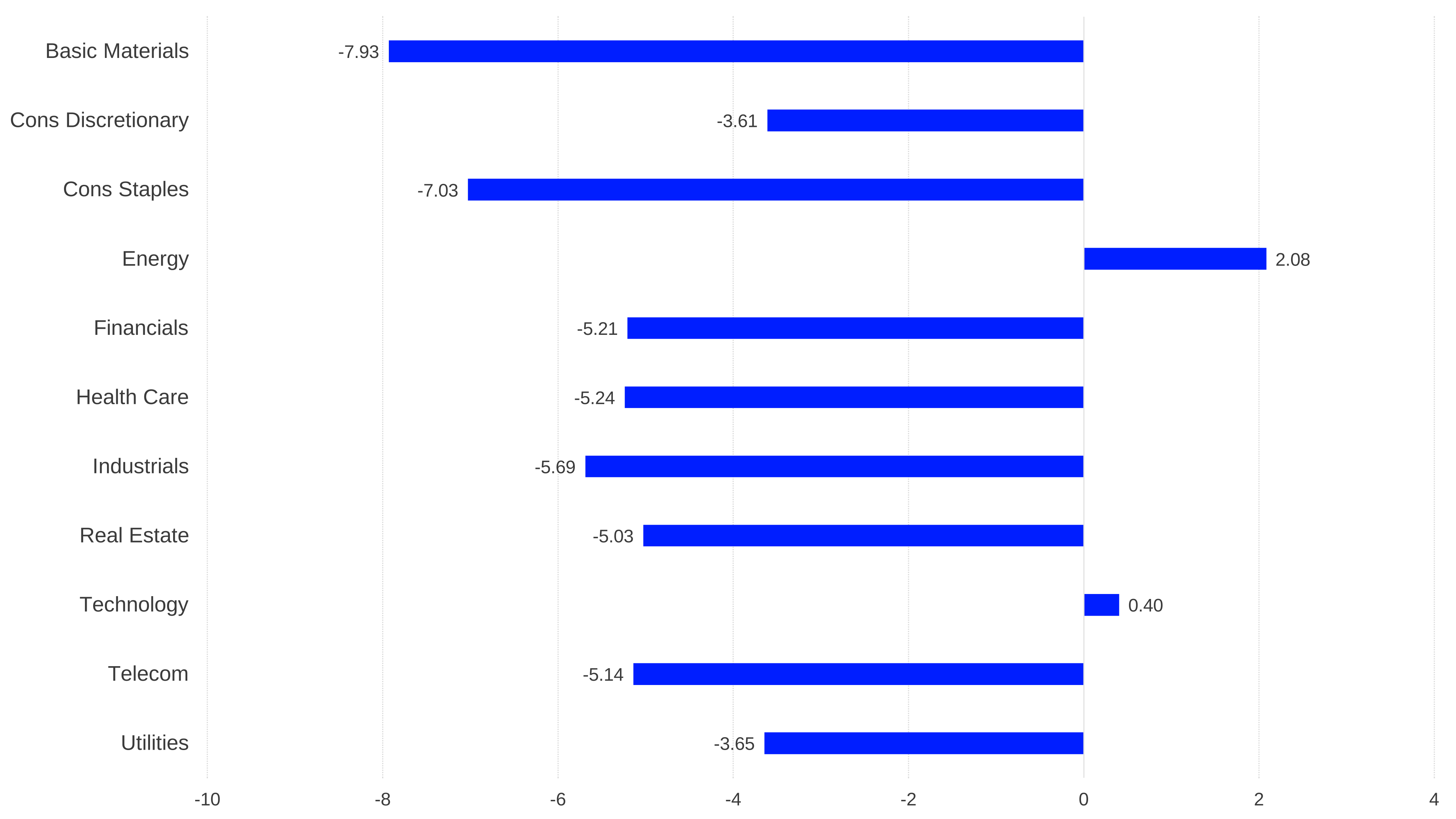
Exhibit 7 shows that industries were generally down across the board with the exceptions of Energy and Technology. Overall, the Energy industry is helped by the higher oil prices, and Technology’s Software sector has bounced back from its recent weakness in March. Looking across the industries, there has not been much of a cyclical pattern, with the defensive Consumer Staples industry down almost twice as much as cyclical Consumer Discretionary. It seems that investors are treating this as a temporary blip and not a major global economic shock that would drive down industries closely tied to the global economy such as Discretionary and Industrials.
Exhibit 7: Month-to-date FTSE All-World industry returns (%, USD)
Source: FTSE Russell/LSEG, Data as of 11 March 2026. Past performance is no guarantee of future results. Please see the end for important legal disclosures.
Expected duration of the crisis
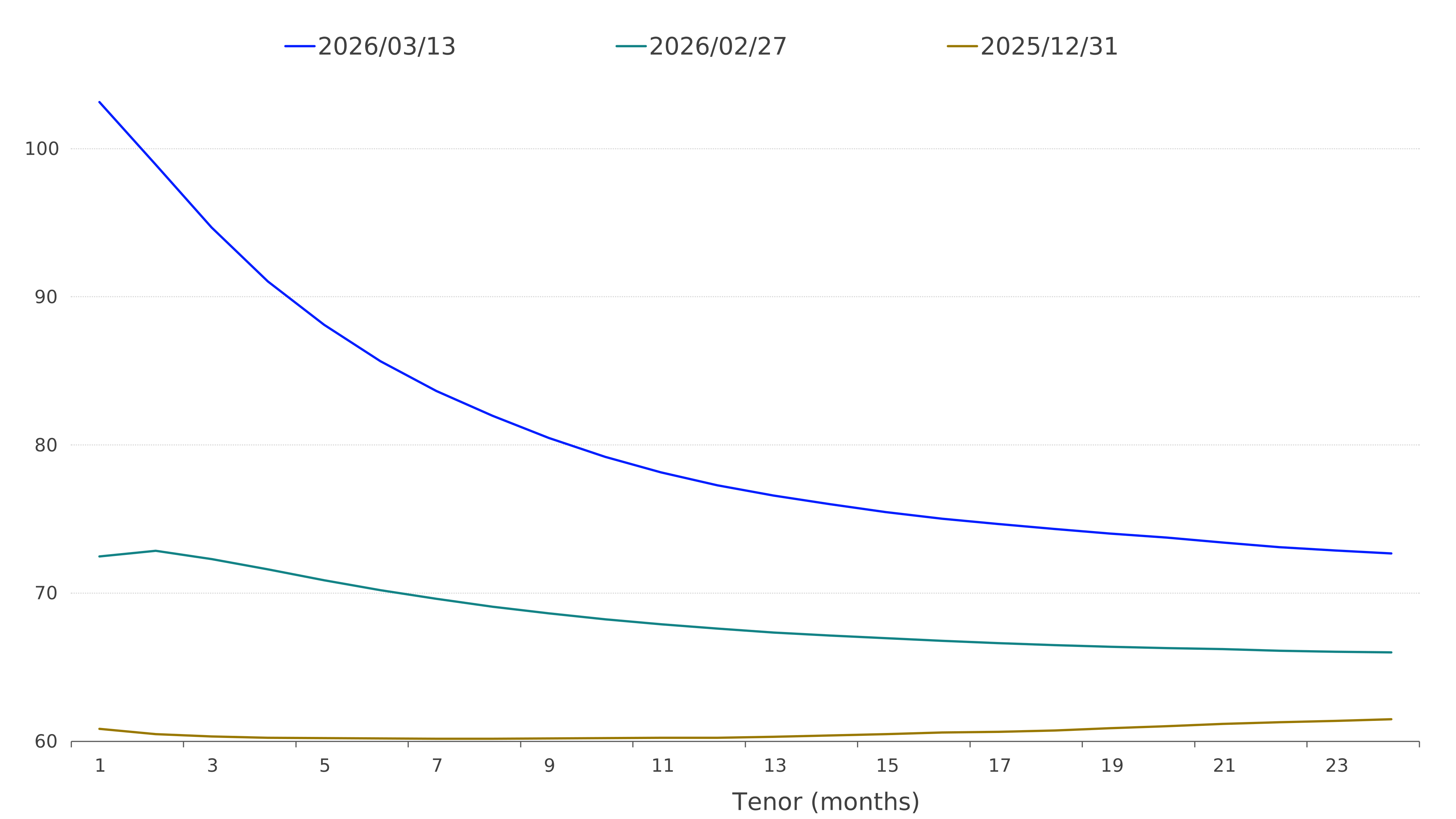
One explanation for the relatively muted response to the crisis is that, so far, markets seem to expect a relatively short crisis and a quick return to normal. This can be seen in Exhibit 8 which shows that the oil futures curve is in backwardation, indicating a very large short-term jump in the expected near-term price of oil but a relatively quick drop back to more normal prices. (For more analysis see our recent Asset Allocation report).
Exhibit 8: Forward Curve: Brent crude oil futures curve (USD)
Source: FTSE Russell/LSEG, Data as of 13 March 2026. Past performance is no guarantee of future results. Please see the end for important legal disclosures.
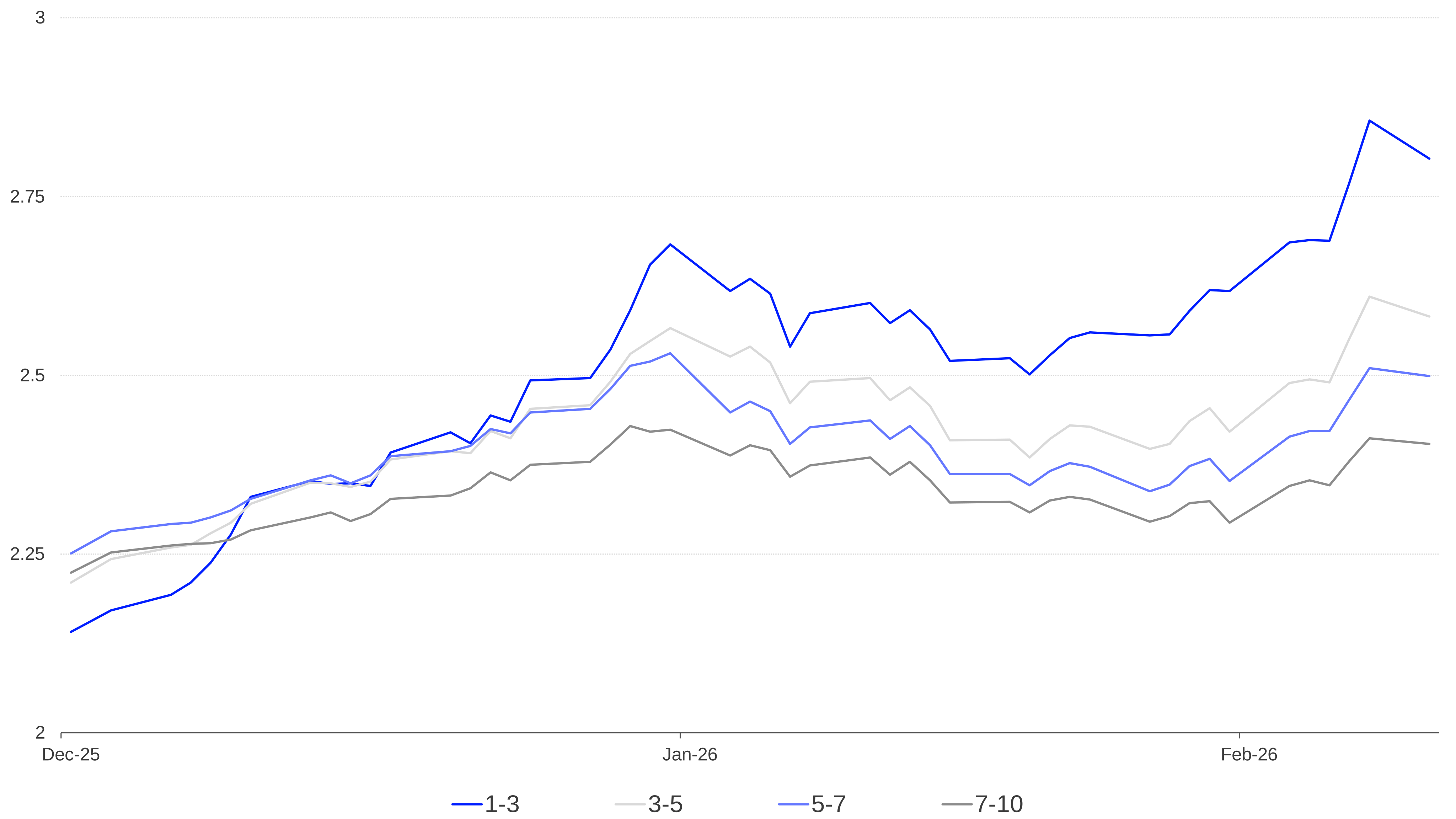
As a result of this relatively benign view of oil price moves, the impact on inflation is also expected to be short-lived. Exhibit 9 shows the US break-even inflation rates for various maturity buckets, ranging from the 1-3 year expectation (dark blue line) to the longer term 7–10-year view in the dark gray. While there was a jump in inflation expectations across all maturities, the largest effect was on the shorter term 1–3-year bucket, and even that is only modestly higher than where it stood at the end of January.
Exhibit 9: US inflation break-evens (%)
Source: FTSE Russell/LSEG, Data as of 11 March 2026. Past performance is no guarantee of future results. Please see the end for important legal disclosures.
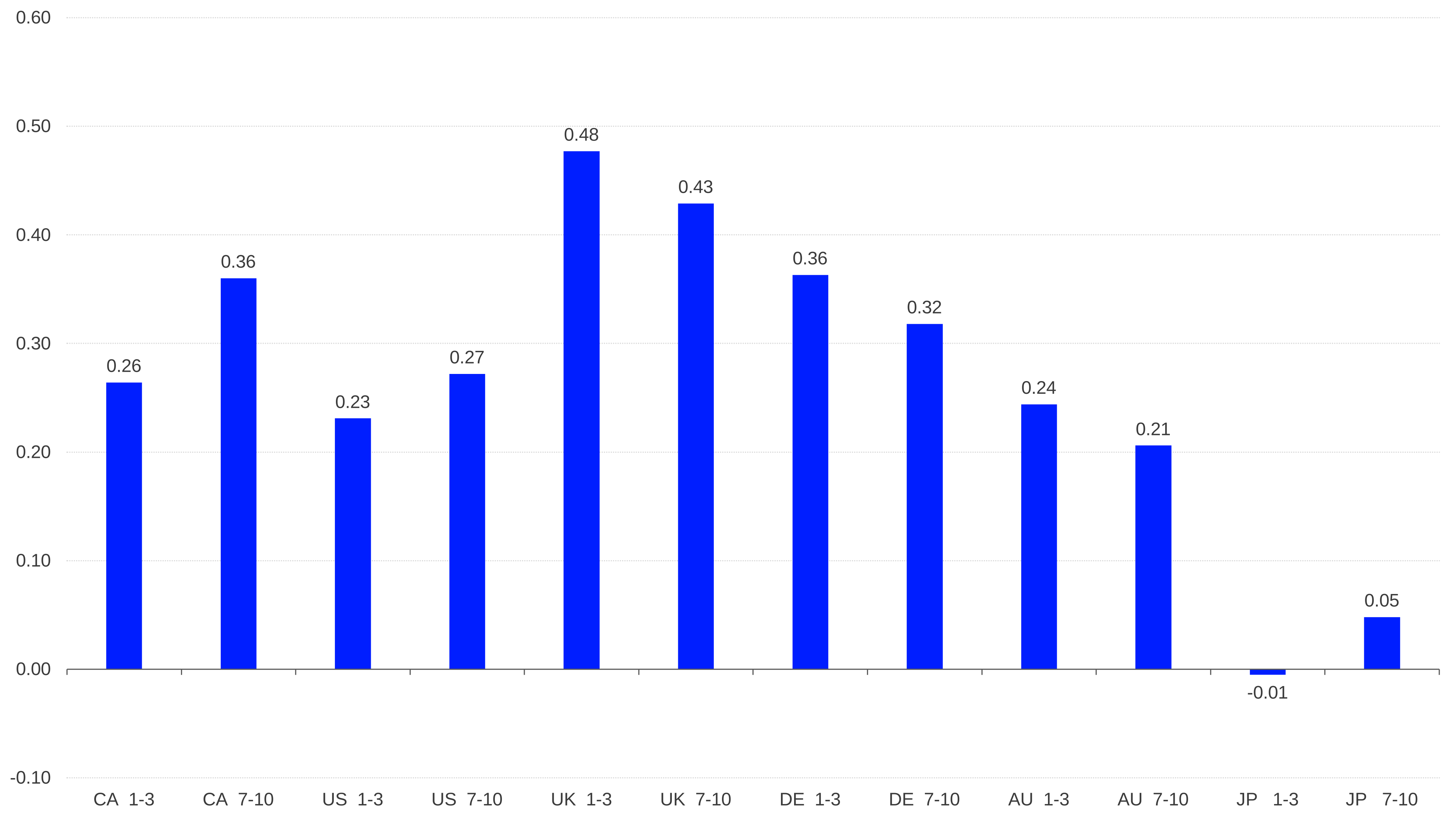
The expected impact of inflationary expectations on monetary policy should be visible in bond yields where there has been a move up in yields, as shown in Exhibit 10. All but Japan’s 1-3 year segment have seen a rise, but the rise in the US has been smaller than in the more exposed UK and Germany (DE).
Exhibit 10. Month-to-date change in sovereign yields (%, 1-3 and 7-10 year)
Source: FTSE Russell/LSEG, Data as of 11 March 2026. Past performance is no guarantee of future results. Please see the end for important legal disclosures.
Conclusion
As of the writing of this insight, the large shock to oil prices has resulted in a relatively muted market reaction. That the transmission mechanism is primarily through oil prices is supported by stronger market reactions in regions with greater exposure to oil shipped through the Strait of Hormuz. For example, Europe, Japan, and Asia Pacific have seen a larger jump in government yields, a larger increase in high yield spreads, higher equity volatility, and a larger sell-off in equities. Nevertheless, the equity market sell-off does not seem very large relative to the historic move in oil prices, and the reason may be the market’s pricing in a short duration for the crisis. Looking at the oil price futures curve, inflation break-evens, and moves in government bond yields, the expectation seems to be for a relatively short crisis and a quick return to normal.
This raises the risk that a longer crisis could keep shipping through the Strait constrained for much longer, which would not only keep the price of oil elevated but would eventually cause supply chain problems due to shortages of oil byproducts. This would impact sectors such as the agricultural sector (fertilizer) and the trucking sector (diesel) that in turn have broad impacts on consumer prices. With increased production costs moving through the economy, a prolonged crisis presents the risk of a much broader inflationary impulse with associated risks to global growth. This could result in much broader dispersion between cyclical and defensive industries globally, and the impact on different economies and their financial markets would be determined by their access to oil products. If the crisis continues, we expect to see more asset repricing that would reflect these effects, and the timing of the repricing could lead to continued volatility.

Disclaimer
© [2026] London Stock Exchange Group plc and its applicable group undertakings (“LSEG”). LSEG includes (1) FTSE International Limited (“FTSE”), (2) Frank Russell Company (“Russell”), (3) FTSE Global Debt Capital Markets Inc. “FTSE Canada”, (4) FTSE Fixed Income LLC (“FTSE FI”), (5) FTSE (Beijing) Consulting Limited (“WOFE”), (6) FTSE EU SAS ("FES"). All rights reserved.
FTSE Russell® is a trading name of FTSE, Russell, FTSE Canada, FTSE FI, WOFE, FTSE EU and other LSEG entities providing LSEG Benchmark and Index services. “FTSE®”, “Russell®”, “FTSE Russell®”, “FTSE4Good®”, “ICB®”, “Refinitiv”, “WMR™” “FR™” and all other trademarks and service marks used herein (whether registered or unregistered) are trademarks and/or service marks owned or licensed by the applicable member of LSEG or their respective licensors.
FTSE International Limited is authorised as a Benchmark Administrator and regulated in the United Kingdom (UK) by the Financial Conduct Authority ("FCA") according to the UK Benchmark Regulation, FCA Reference Number 796803. FTSE EU SAS is authorised as Benchmark Administrator and regulated in the European Union (EU) by the Autorité des Marches Financiers (“AMF”) according to the EU Benchmark Regulation.
All information is provided for information purposes only. All information and data contained in this publication is obtained by LSEG, from sources believed by it to be accurate and reliable. Because of the possibility of human and mechanical inaccuracy as well as other factors, however, such information and data is provided "as is" without warranty of any kind. No member of LSEG nor their respective directors, officers, employees, partners or licensors make any claim, prediction, warranty or representation whatsoever, expressly or impliedly, either as to the accuracy, timeliness, completeness, merchantability of any information or LSEG Products, or of results to be obtained from the use of LSEG products, including but not limited to indices, rates, data and analytics, or the fitness or suitability of the LSEG products for any particular purpose to which they might be put. The user of the information assumes the entire risk of any use it may make or permit to be made of the information.
No responsibility or liability can be accepted by any member of LSEG nor their respective directors, officers, employees, partners or licensors for (a) any loss or damage in whole or in part caused by, resulting from, or relating to any inaccuracy (negligent or otherwise) or other circumstance involved in procuring, collecting, compiling, interpreting, analysing, editing, transcribing, transmitting, communicating or delivering any such information or data or from use of this document or links to this document or (b) any direct, indirect, special, consequential or incidental damages whatsoever, even if any member of LSEG is advised in advance of the possibility of such damages, resulting from the use of, or inability to use, such information.
No member of LSEG nor their respective directors, officers, employees, partners or licensors provide investment advice and nothing in this document should be taken as constituting financial or investment advice. No member of LSEG nor their respective directors, officers, employees, partners or licensors make any representation regarding the advisability of investing in any asset or whether such investment creates any legal or compliance risks for the investor. A decision to invest in any such asset should not be made in reliance on any information herein. Indices and rates cannot be invested in directly. Inclusion of an asset in an index or rate is not a recommendation to buy, sell or hold that asset nor confirmation that any particular investor may lawfully buy, sell or hold the asset or an index or rate containing the asset. The general information contained in this publication should not be acted upon without obtaining specific legal, tax, and investment advice from a licensed professional.
Past performance is no guarantee of future results. Charts and graphs are provided for illustrative purposes only. Index and/or rate returns shown may not represent the results of the actual trading of investable assets. Certain returns shown may reflect back-tested performance. All performance presented prior to the index or rate inception date is back-tested performance. Back-tested performance is not actual performance, but is hypothetical. The back-test calculations are based on the same methodology that was in effect when the index or rate was officially launched. However, back-tested data may reflect the application of the index or rate methodology with the benefit of hindsight, and the historic calculations of an index or rate may change from month to month based on revisions to the underlying economic data used in the calculation of the index or rate.
This document may contain forward-looking assessments. These are based upon a number of assumptions concerning future conditions that ultimately may prove to be inaccurate. Such forward-looking assessments are subject to risks and uncertainties and may be affected by various factors that may cause actual results to differ materially. No member of LSEG nor their licensors assume any duty to and do not undertake to update forward-looking assessments.
No part of this information may be reproduced, stored in a retrieval system or transmitted in any form or by any means, electronic, mechanical, photocopying, recording or otherwise, without prior written permission of the applicable member of LSEG. Use and distribution of LSEG data requires a licence from LSEG and/or its licensors.