
Belle Chang

Tae Yoon Kim
Korea’s economic growth rebounded in 2025, supported primarily by a strong recovery in exports. This improving macro backdrop has been clearly reflected in equity market performance, with Korean equities delivering an impressive 96% total return in 2025 and maintaining positive momentum into 2026. In Part 1 of this Korea equity series insight, we discuss the current macro environment, how this resilience is translating into equity market performance, and the key structural reforms that could have a longer-term impact on Korean equity’s outlook. In Part 2, we will take a deeper dive into the industries driving Korea’s equity market outperformance.
- Korea’s growth rebounded in 2025, driven by strong semiconductor exports, supporting both economic momentum and equity market performance.
- Korean equities are sensitive to global risk events, as seen in the March selloff, but have demonstrated a strong rebound, reflecting solid underlying fundamentals.
- Corporate governance reforms and Korea’s leadership in AI hardware are reinforcing a more sustainable, long-term investment case beyond short-term risk-off led volatility.
Exports driving economic growth
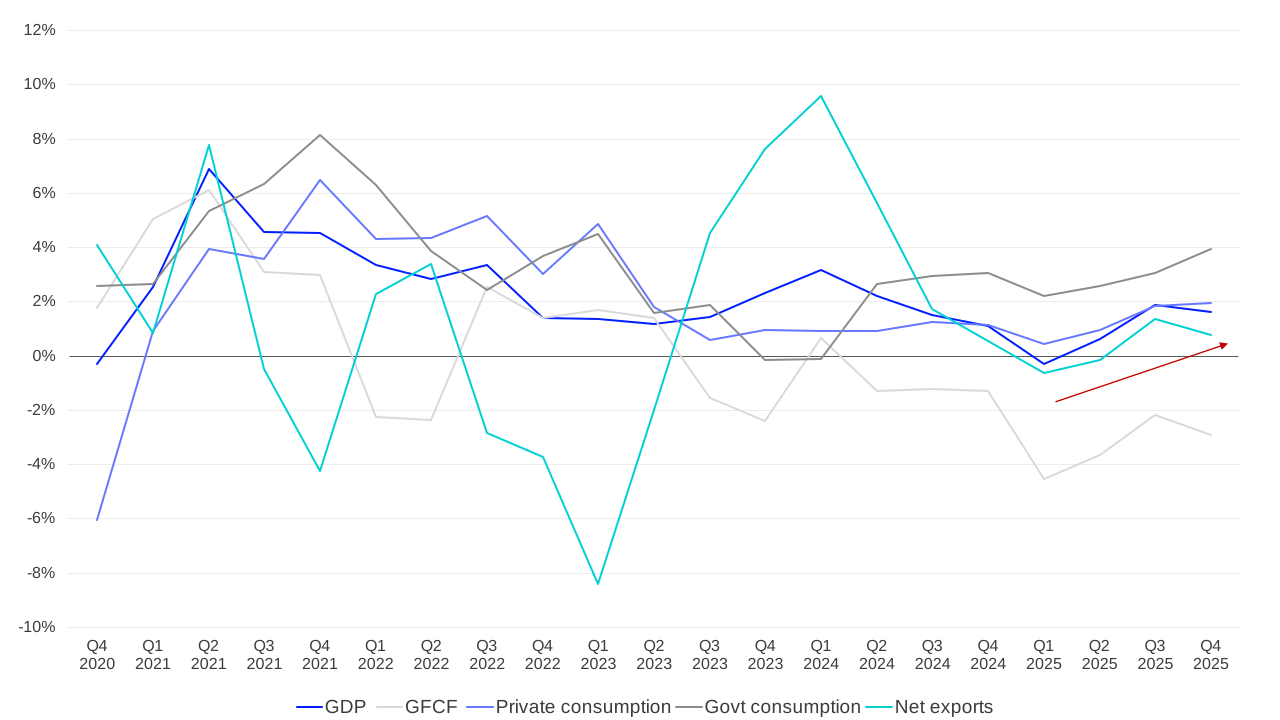
Korea’s economic growth showed a slowing trend from 4Q23 through 1Q25, with weaker exports being the main drag amid decelerating global growth. Exports of PC, smartphones and autos slowed in 2024. Investment (gross fixed capital formation) also dipped further from positive growth to negative territory starting in 2Q24. The softer growth outlook prompted the Bank of Korea to cut its policy rate by 50bps from 3.50% to 3.00% in 2024, followed by a further 50bps of easing in 2025.
Just as concerns over US tariff policy heightened uncertainty around Korea’s economic trajectory, front‑loading of exports supported a rebound in export growth in 2Q25. This momentum strengthened into 2H25, driven by surging AI‑related demand that significantly boosted semiconductor exports.
EXHIBIT 1: KOREA GDP YOY
Source: FTSE Russell and LSEG. Data as of 2025. Past performance is not a guide to future returns. Please see the end for important legal disclosures.
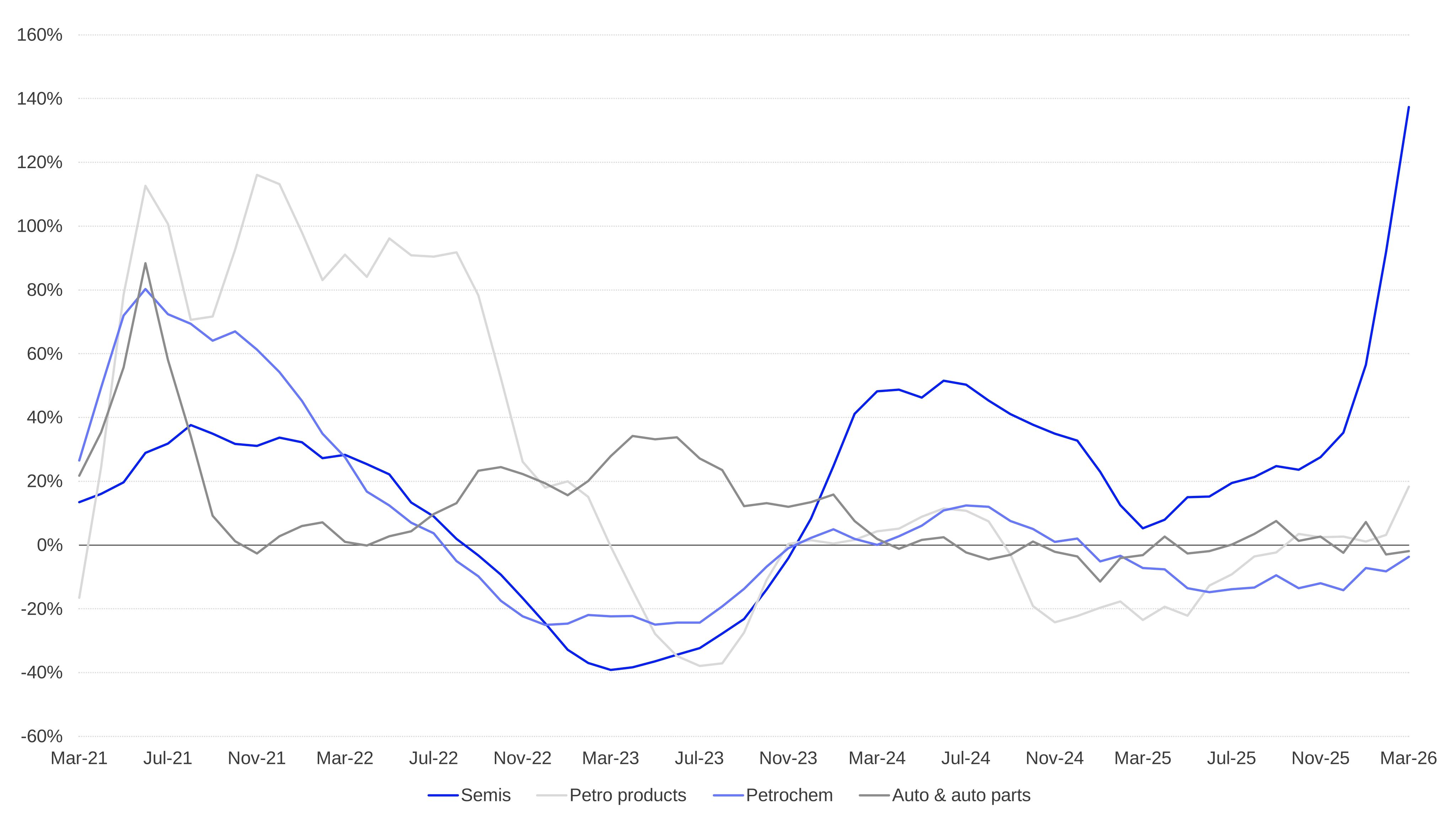
Semiconductor exports have posted double digit-growth since May 2025. Robust AI demand boosted orders for Korea’s High Bandwidth Memory (HBM), a segment in which Korean firms account for ~80% of global market share. In contrast, exports of petroleum and petrochemical products declined mainly due to slowing global growth, oversupply, and softer prices in 2024, although there was a slight recovery in 2025. Auto export growth stayed relatively flat throughout 2025. While US auto tariffs weighed on exports to the US, Korea’s exports of autos to non-US countries, mainly led by EVs, continued to grow.
Exhibit 2: Korea export growth – major products (yoy, 3mma)
Source: FTSE Russell and LSEG. Data as of March 2026. Past performance is not a guide to future returns. Please see the end for important legal disclosures.
Solid growth fundamental also reflected in equity performance
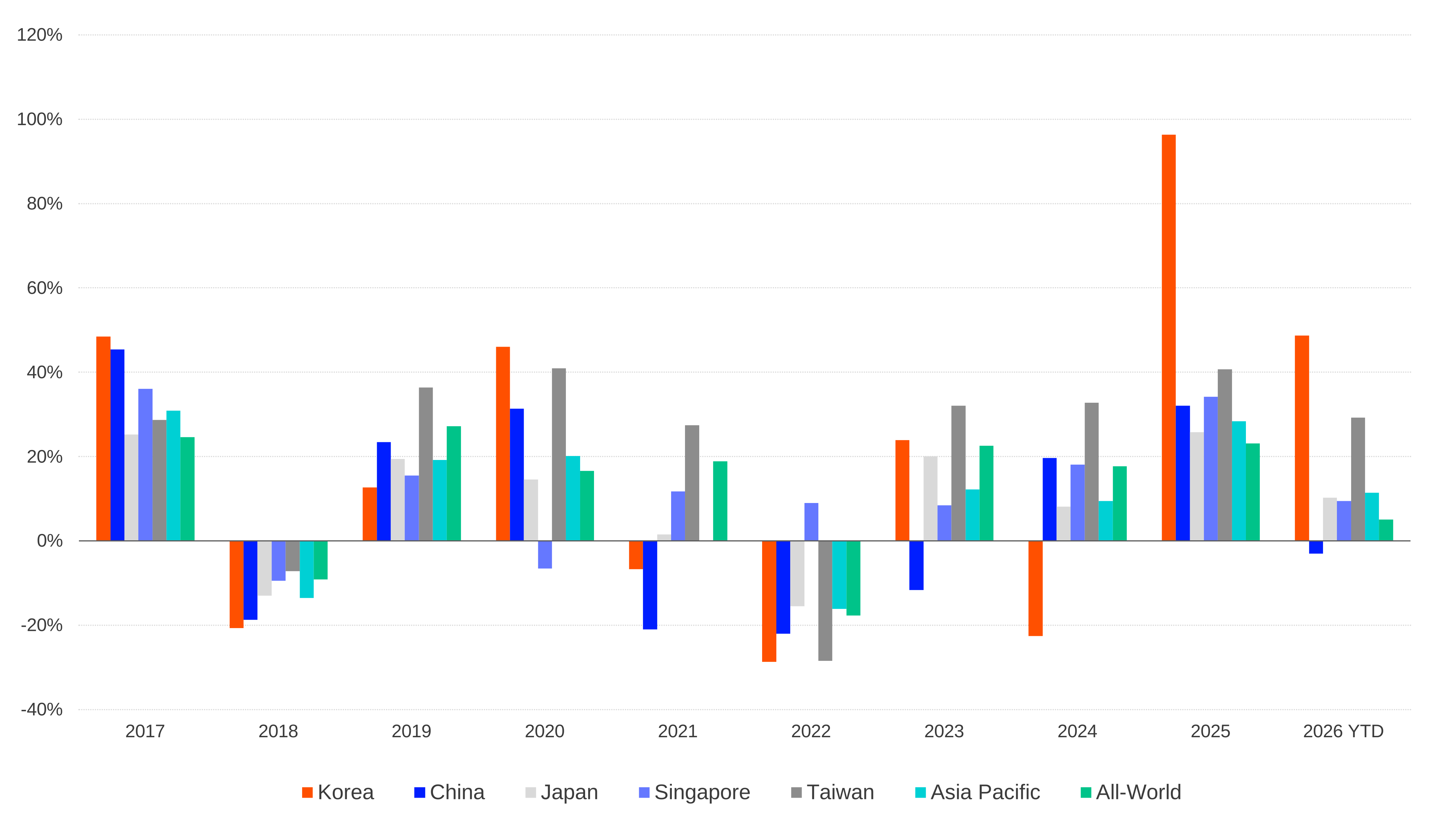
Not only did exports and economic growth see a recovery in 2025, but an improvement in the overall macro backdrop was also reflected in the Korean equity market. After a sluggish 2024, Korean equities outperformed APAC (+28%) and All-World (+23%) in 2025, posting a total return of 96% in USD terms (Exhibit 3). Breaking down by industry, Tech (+90%) and Telecom (+31%) led the outperformance in 2025, with the positive momentum extending into 2026.
EXHIBIT 3: ANNUAL TOTAL RETURN (USD)
Source: FTSE Russell and LSEG. Data as of April 15, 2026. Past performance is not a guide to future returns. Please see the end for important legal disclosures.
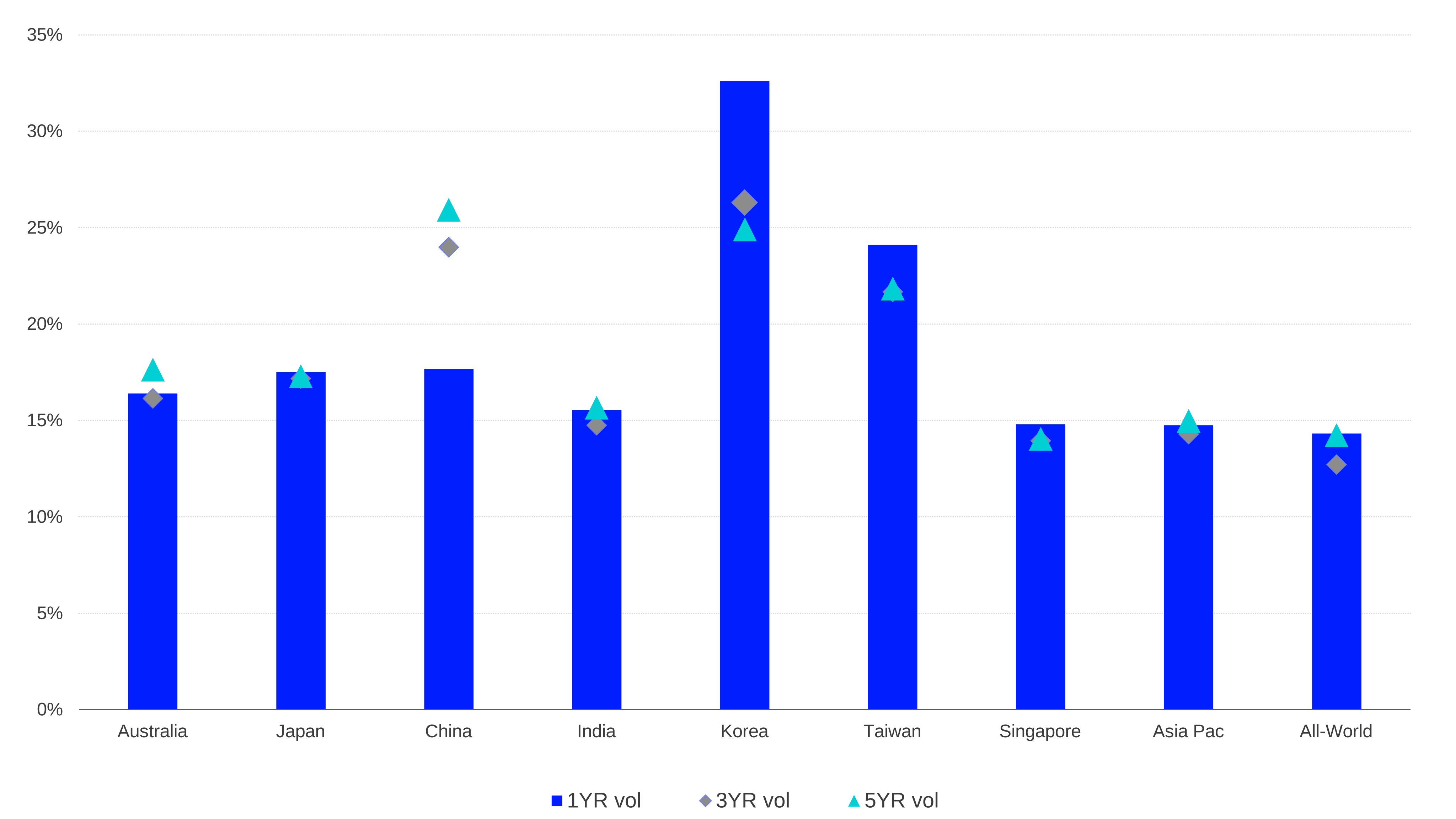
Nonetheless, the Middle East conflict has weighed on global equities, and Korea underperformed given its relatively high beta characteristics (Exhibit 4) and strong returns over the past year. In periods of heightened geopolitical or macro uncertainty, this positioning tends to amplify downside moves, as global investors reduce risks and take profit in markets that have outperformed. In March, FTSE Korea fell -25.2% in USD terms, vs FTSE All-World’s -7.3%.
Exhibit 4: Volatility (Weekly observations)
Source: FTSE Russell and LSEG. Data as of March 2026. Past performance is not a guide to future returns. Please see the end for important legal disclosures.
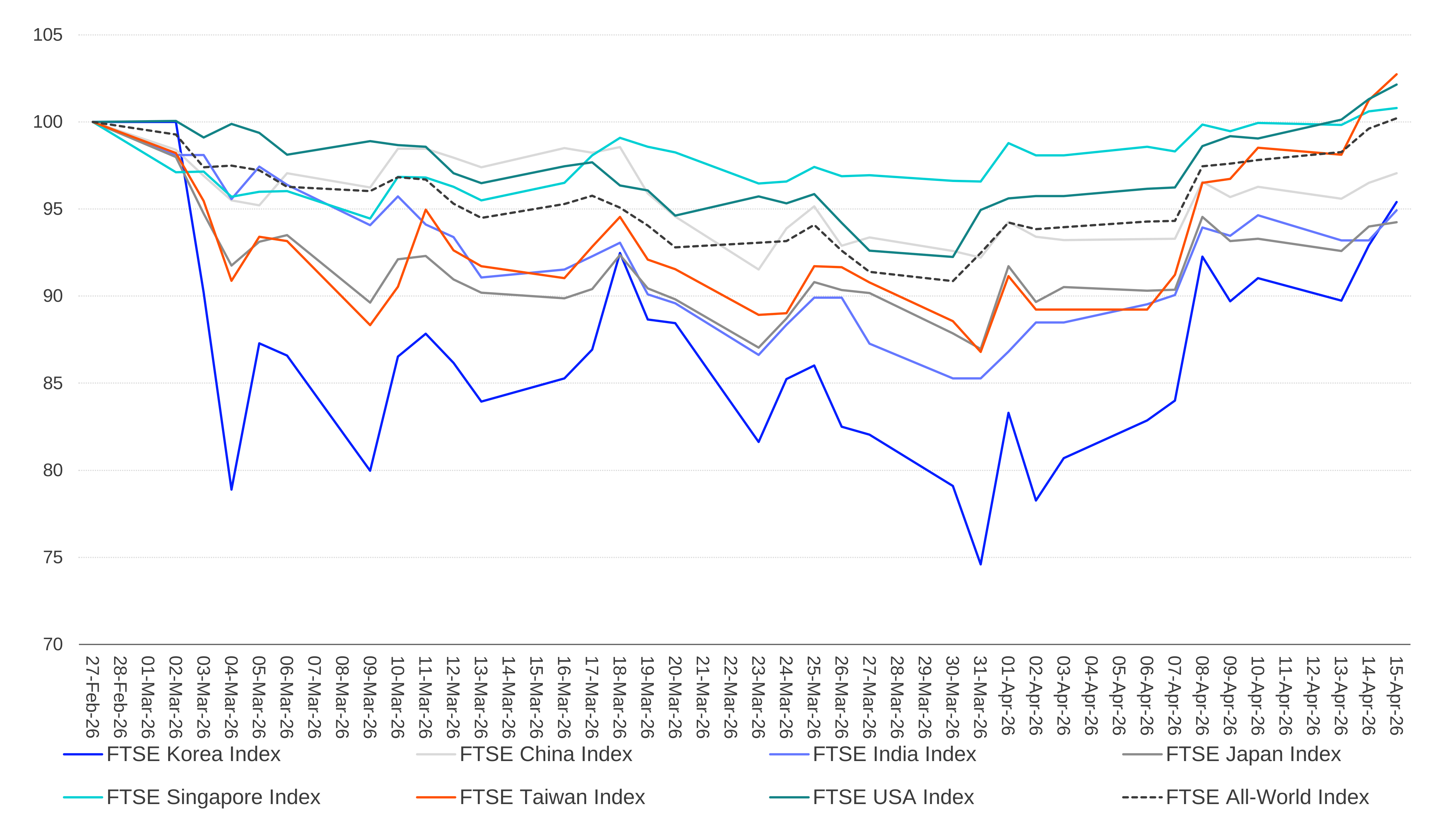
Nonetheless, this high beta characteristic should be viewed in context rather than as a structural concern. As seen in the subsequent recovery into early April (Exhibit 5), Korean equities also tend to rebound quickly as risk sentiment stabilizes, supported by improving fundamentals. YTD as of April 15, Korea remains one of the best performing markets (+48.7%) among APAC (Exhibit 3). More importantly, beyond these short-term fluctuations, there are structural drivers that underpin a more constructive medium- to long-term outlook. These factors, which we discuss in detail in the following sections, suggest that periods of volatility may present opportunities rather than risks for long-term investors.
EXHIBIT 5: TOTAL RETURN SINCE THE MIDDLE EAST CONFLICT OUTBREAK (USD, REBASE)
Source: FTSE Russell and LSEG. Data as of April 15, 2026. Past performance is not a guide to future returns. Please see the end for important legal disclosures.
The value-up program – a longer-term structural driver
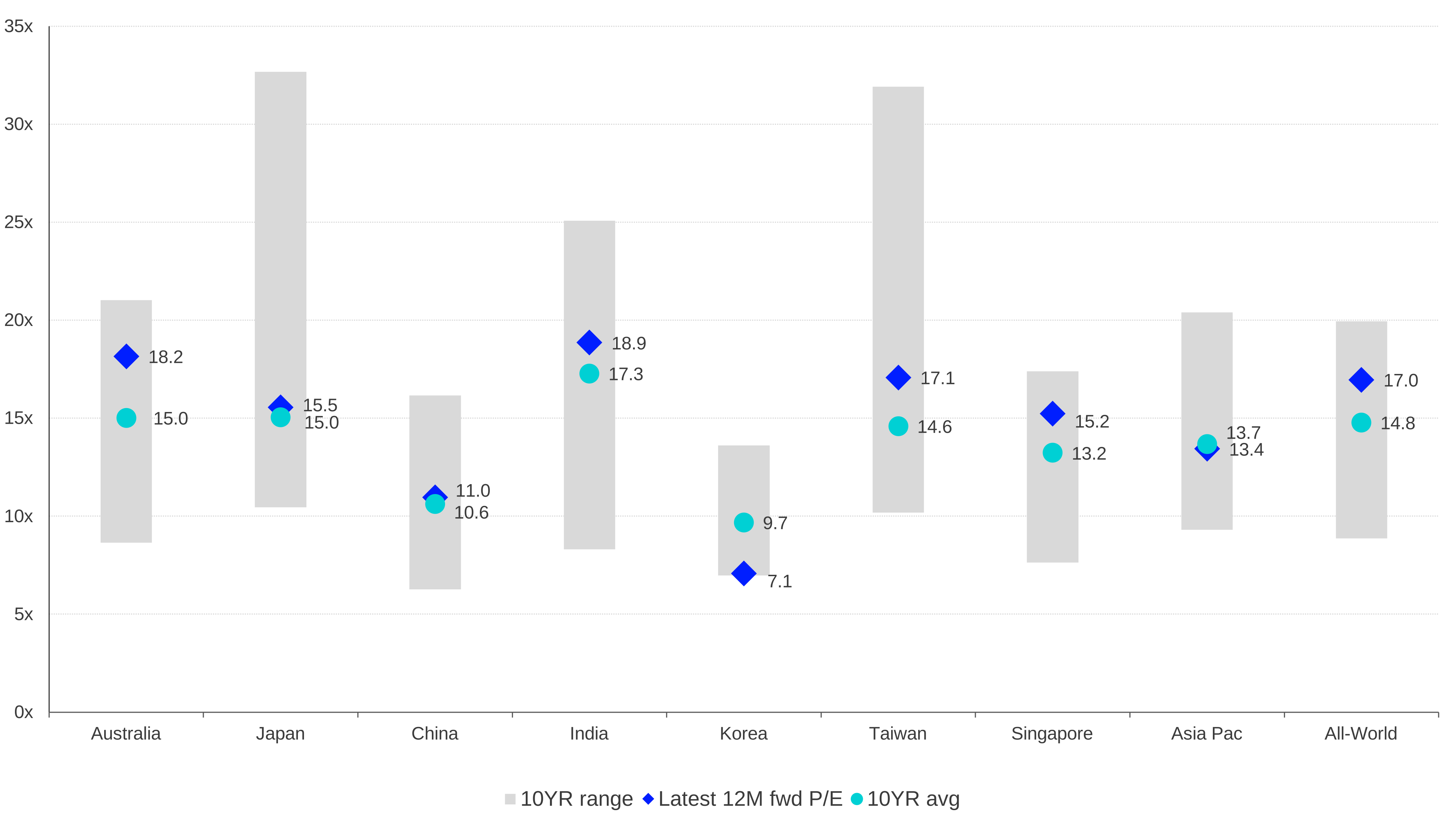
The first leg of the Korean equity rebound began in early 2025, when President Lee accelerated efforts to implement the Corporate Value‑Up Program aimed at improving corporate governance. Although these policy initiatives represent long-run structural reforms, they are intended to help address the persistent “Korea Discount” – the tendency for Korean equities to trade at lower valuations than global peers (Exhibit 6).
EXHIBIT 6: 12M FORWARD P/E RATIOS
Source: FTSE Russell and LSEG. Data as of March 2026. Past performance is not a guide to future returns. Please see the end for important legal disclosures.
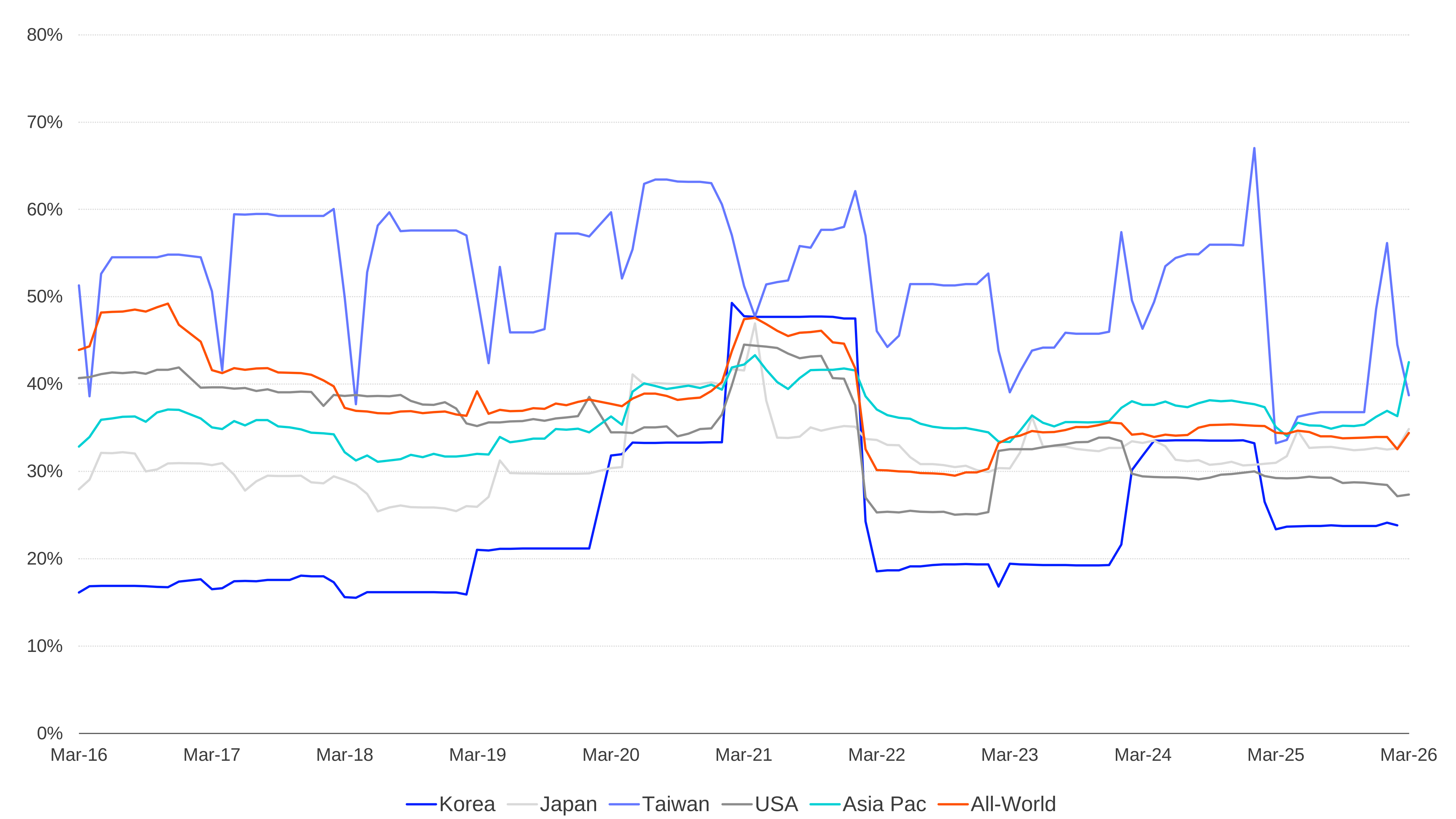
One major policy focus is to incentivize higher dividend payments to shareholders through tax benefits, encouraging Korean corporates to align more closely with global norms. Indeed, Korea’s dividend payout ratio has been relatively low compared with both its regional peers and the global equity average (Exhibit 7). In February 2026, corporate tax laws were amended to require high-dividend companies to disclose formal Value-Up plans in order to remain eligible for tax benefits.
EXHIBIT 7: DIVIDEND PAYOUT RATIO
Source: FTSE Russell and LSEG. Data as of March 2026. Past performance is not a guide to future returns. Please see the end for important legal disclosures.
In addition, Korean firms are now required to cancel newly acquired treasury shares within 12 months, and existing treasury shares within 18 months, in an effort to improve governance standards and support equity valuations. Notably, Samsung Electronics and SK Group have already announced plans to cancel a combined KRW 20.8 trillion (~USD 14.1 billion) in treasury shares.
Another important reform has been the tightening of dual-listing rules. Historically, dual listings have diluted shareholder value and depressed holding-company valuations, adding to the Korea discount. In March 2026, the government announced stricter regulations that, in principle, ban new subsidiary listings by large conglomerates. The market responded positively, with Korean equities rising sharply on the announcement as investors anticipated improved capital efficiency and clearer corporate structures. Overall, these measures reinforce the broader Value-Up agenda and underpin a more sustainable re-rating of Korean equities.
Hardware driving the outperformance of Korean equities in 2025
Beyond structural policy related drivers, the explosive surge in AI‑related demand for Korean memory chips has been the dominant catalyst behind Korea’s market outperformance. As Exhibit 8 shows, the Tech and Telecom industries have significantly outperformed, while Industrials is another strong performer. As of March 2026, Tech and Telecom together represented 58.6% of the FTSE Korea Index, while Industrials accounted for 14.6%, underscoring the importance of these industries to the overall equity performance.
EXHIBIT 8: KOREA TOTAL RETURN – MAJOR INDUSTRIES (USD, REBASE)
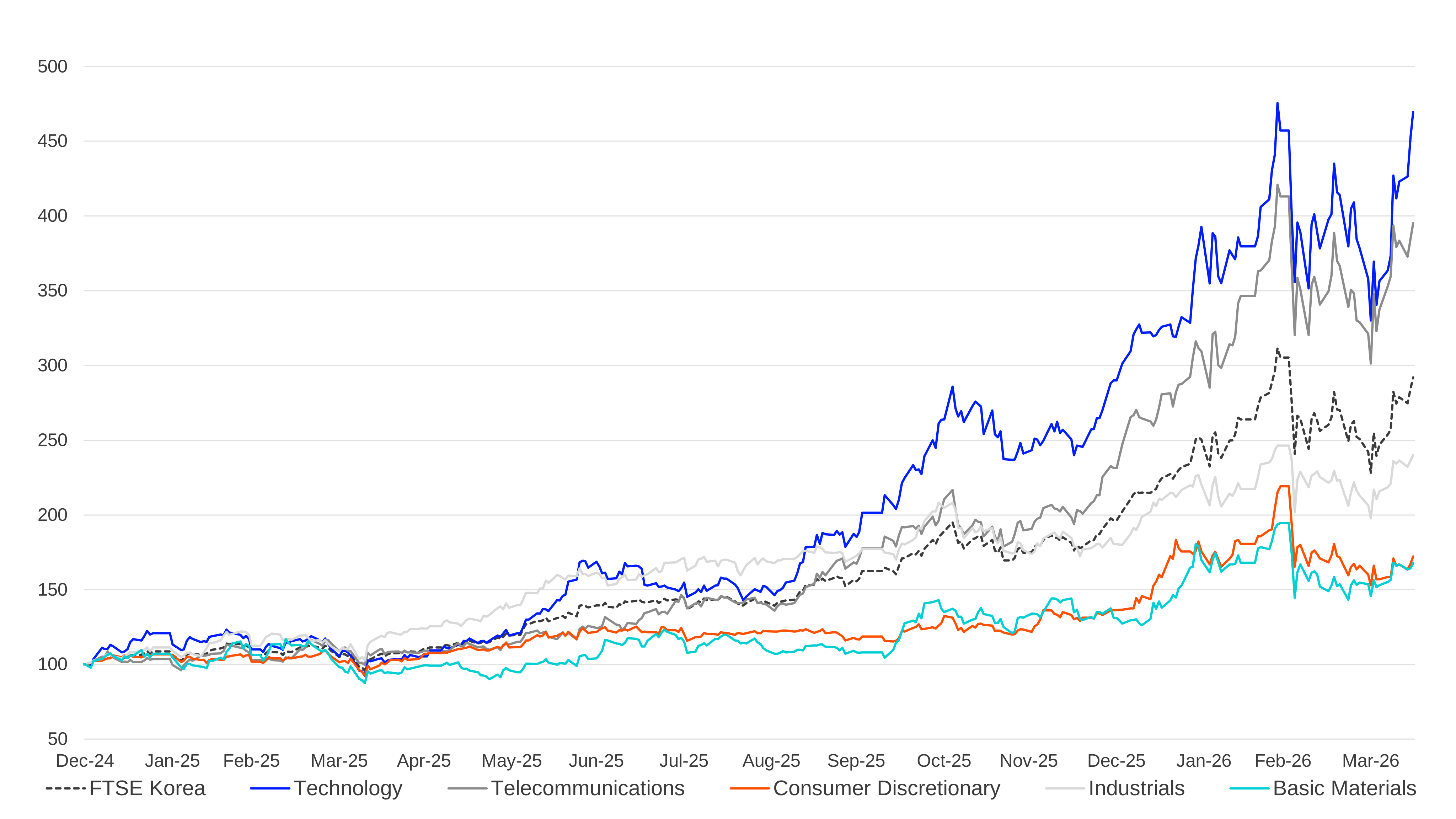
Source: FTSE Russell and LSEG. Data as of April 15, 2026. Past performance is not a guide to future returns. Please see the end for important legal disclosures.
As discussed in Decoding the hardware-software performance dispersion (Mar 2026), the evolving AI narrative has shifted technology leadership from software to hardware. Hardware companies benefit from tangible demand, secured orders, and near term cash flows, while software faces uncertainty around model economics, disruption risks, and capex payoff. This shift has led to a notable divergence in performance between software and hardware since April 2025. Hence, markets that are heavily weighted in hardware and telecom equipment, such as Japan, Korea and Taiwan, have outperformed.
Korea’s leadership in high‑performance memory has continued to translate into strong earnings delivery and robust forward guidance for SK Hynix and Samsung Electronics. Additionally, Nvidia has announced deeper strategic partnerships with the Korean government and major Korean corporates, including Samsung Electronics, SK Hynix, SK Telecom and Hyundai Motor (for autonomous driving), to further develop AI-related infrastructure and technologies.
Industrials is another industry that has performed well since 2025. Aerospace and defense stocks, such as Hanwha Aerospace, have benefited from Europe’s initiatives in raising defense capacity and spending. Korean shipbuilders have also benefited from rising global defense-related orders and an increase in demand for energy, e.g. LNG, shipments. For a more detailed industry outlook, we will discuss in the next report of this Korean macro and equity series.
Conclusion
Korea’s equity market performance has been supported by a combination of cyclical improvement and structural change. Export recovery has improved the macro backdrop, and corporate reforms are beginning to address the long-standing Korea discount, whilst surging AI demand has bolstered Korea’s importance in the global semiconductor value chain. Although recent geopolitical tensions have brought the country’s sensitivity to global trade and energy disruptions to the fore, the broader case for Korean equities remains attractive in the long-term.

Disclaimer
© [2026] London Stock Exchange Group plc and its applicable group undertakings (“LSEG”). LSEG includes (1) FTSE International Limited (“FTSE”), (2) Frank Russell Company (“Russell”), (3) FTSE Global Debt Capital Markets Inc. “FTSE Canada”, (4) FTSE Fixed Income LLC (“FTSE FI”), (5) FTSE (Beijing) Consulting Limited (“WOFE”), (6) FTSE EU SAS ("FES"). All rights reserved.
FTSE Russell® is a trading name of FTSE, Russell, FTSE Canada, FTSE FI, WOFE, FTSE EU and other LSEG entities providing LSEG Benchmark and Index services. “FTSE®”, “Russell®”, “FTSE Russell®”, “FTSE4Good®”, “ICB®”, “Refinitiv”, “WMR™” “FR™” and all other trademarks and service marks used herein (whether registered or unregistered) are trademarks and/or service marks owned or licensed by the applicable member of LSEG or their respective licensors.
FTSE International Limited is authorised as a Benchmark Administrator and regulated in the United Kingdom (UK) by the Financial Conduct Authority ("FCA") according to the UK Benchmark Regulation, FCA Reference Number 796803. FTSE EU SAS is authorised as Benchmark Administrator and regulated in the European Union (EU) by the Autorité des Marches Financiers (“AMF”) according to the EU Benchmark Regulation.
All information is provided for information purposes only. All information and data contained in this publication is obtained by LSEG, from sources believed by it to be accurate and reliable. Because of the possibility of human and mechanical inaccuracy as well as other factors, however, such information and data is provided "as is" without warranty of any kind. No member of LSEG nor their respective directors, officers, employees, partners or licensors make any claim, prediction, warranty or representation whatsoever, expressly or impliedly, either as to the accuracy, timeliness, completeness, merchantability of any information or LSEG Products, or of results to be obtained from the use of LSEG products, including but not limited to indices, rates, data and analytics, or the fitness or suitability of the LSEG products for any particular purpose to which they might be put. The user of the information assumes the entire risk of any use it may make or permit to be made of the information.
No responsibility or liability can be accepted by any member of LSEG nor their respective directors, officers, employees, partners or licensors for (a) any loss or damage in whole or in part caused by, resulting from, or relating to any inaccuracy (negligent or otherwise) or other circumstance involved in procuring, collecting, compiling, interpreting, analysing, editing, transcribing, transmitting, communicating or delivering any such information or data or from use of this document or links to this document or (b) any direct, indirect, special, consequential or incidental damages whatsoever, even if any member of LSEG is advised in advance of the possibility of such damages, resulting from the use of, or inability to use, such information.
No member of LSEG nor their respective directors, officers, employees, partners or licensors provide investment advice and nothing in this document should be taken as constituting financial or investment advice. No member of LSEG nor their respective directors, officers, employees, partners or licensors make any representation regarding the advisability of investing in any asset or whether such investment creates any legal or compliance risks for the investor. A decision to invest in any such asset should not be made in reliance on any information herein. Indices and rates cannot be invested in directly. Inclusion of an asset in an index or rate is not a recommendation to buy, sell or hold that asset nor confirmation that any particular investor may lawfully buy, sell or hold the asset or an index or rate containing the asset. The general information contained in this publication should not be acted upon without obtaining specific legal, tax, and investment advice from a licensed professional.
Past performance is no guarantee of future results. Charts and graphs are provided for illustrative purposes only. Index and/or rate returns shown may not represent the results of the actual trading of investable assets. Certain returns shown may reflect back-tested performance. All performance presented prior to the index or rate inception date is back-tested performance. Back-tested performance is not actual performance, but is hypothetical. The back-test calculations are based on the same methodology that was in effect when the index or rate was officially launched. However, back-tested data may reflect the application of the index or rate methodology with the benefit of hindsight, and the historic calculations of an index or rate may change from month to month based on revisions to the underlying economic data used in the calculation of the index or rate.
This document may contain forward-looking assessments. These are based upon a number of assumptions concerning future conditions that ultimately may prove to be inaccurate. Such forward-looking assessments are subject to risks and uncertainties and may be affected by various factors that may cause actual results to differ materially. No member of LSEG nor their licensors assume any duty to and do not undertake to update forward-looking assessments.
No part of this information may be reproduced, stored in a retrieval system or transmitted in any form or by any means, electronic, mechanical, photocopying, recording or otherwise, without prior written permission of the applicable member of LSEG. Use and distribution of LSEG data requires a licence from LSEG and/or its licensors.