Alan Meng

Claire Hugo
Impact bonds support a wide range of outcomes, from financing climate solutions to supporting social programmes and sustainable development. These bonds, which encompass labelled green, social and sustainability (GSS) bonds[note1], have become an increasingly important mechanism for enabling investors to direct capital towards their environmental and social objectives.
By the end of 2025, the total outstanding global GSS bond market had reached $5.32trn, comprising $3.3trn in green bonds, $827bn in social bonds and $1.2trn in sustainability bonds. For many investors, impact bonds are now a core component of global fixed income portfolios.
As impact bond issuance accelerates, investors face growing challenges around transparency and comparability across this rapidly expanding market. In this FTSE Russell Insight, we examine key market trends and how the FTSE Impact Bond Index Series provides comprehensive, standards-aligned coverage of this important fixed income market segment.
Growth and resilience across the impact bond market
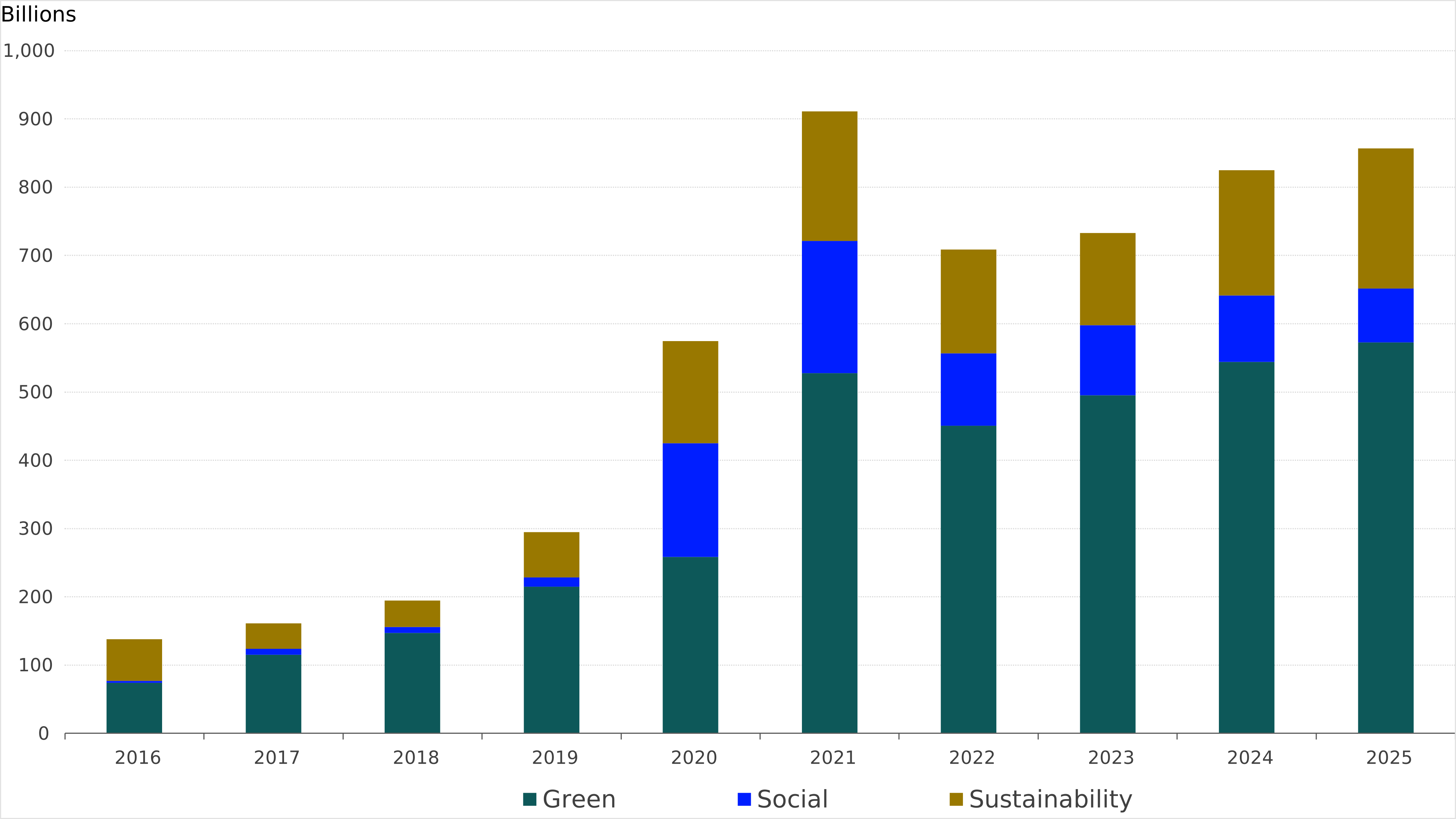
The labelled GSS bond market has expanded significantly in the last decade, with annual issuance increasing more than sixfold since 2016 and green bonds consistently accounting for the majority of primary market volumes (Figure 1).
Despite a more complex macroeconomic backdrop in recent years, the labelled bond market has remained resilient. In 2025, annual issuance continued to grow, with total GSS issuance reaching $856bn—representing 4% year-on-year growth and 6.5% of overall new bond issuance. [note2] Among the GSS total, green bonds continued to anchor the market, with $573bn issued in 2025, compared to $204bn in sustainability bonds and $79bn in social bonds.
Regionally, despite a modest year-on-year decline, Europe remained the largest source of green bond issuance in 2025 (at $311bn, representing 54% of global volumes). Issuance in the region has been supported by ongoing regulatory developments, such as the Sustainable Finance Disclosure Regulation 2.0 and the EU Green Bond Standard.
In 2025, Asia-Pacific emerged as the fastest-growing region for impact bonds, with issuance rising 30%, driven in part by a near-doubling of green bond issuance in China from the year before. This trend reflects strengthening regulatory drivers, such as Japan’s GX transition policy and China’s updated green taxonomy, alongside rising investor appetite across these markets.
Overall, the impact bond market’s ability to sustain growth amid geopolitical tensions and broader market volatility highlights continued investor demand and the increasing role of labelled bonds in global fixed income allocations.
Figure 1. Annual issuance of labelled GSS bonds
Source: LSEG D&A, data as of 31 Dec 2025, excluding US municipal bonds. Past performance is not a guide to future returns. Please see the end for important legal disclosures.
Broadening applications of impact bond financing
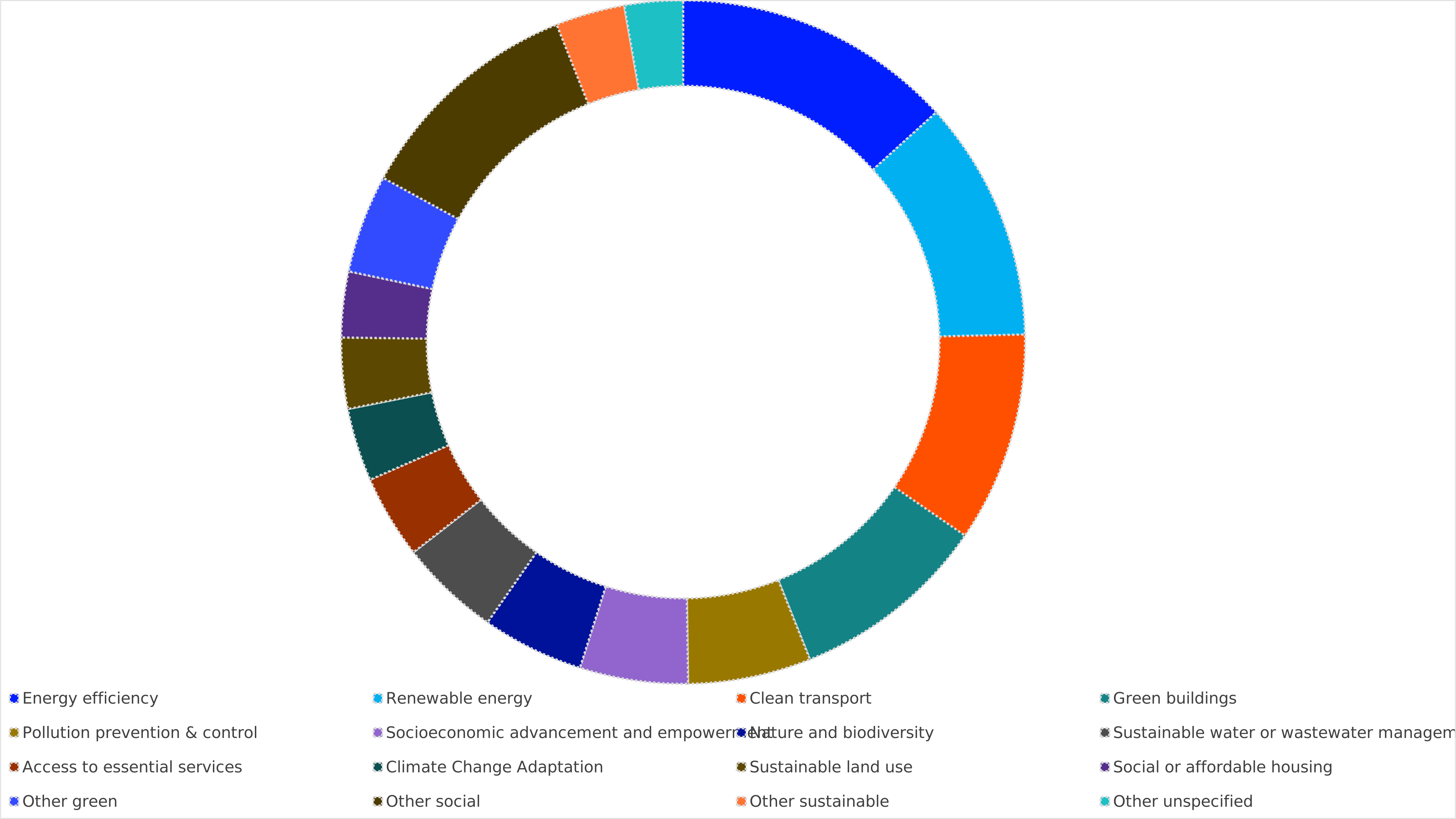
This sustained growth is also helping to expand the types of projects financed through impact bond issuance. As shown in Figure 2, the proceeds of GSS bond issues now support a wide spectrum of initiatives—from renewable energy and clean transport to affordable housing, healthcare and education—reflecting both evolving sustainability priorities and the maturation of the labelled bond market.
Climate mitigation remains a core focus in the impact bond market, with energy efficiency accounting for 13% of total GSS bond proceeds by outstanding amount, and renewable energy an additional 11%. Social themes continue to expand, with socioeconomic advancement and empowerment representing the largest share of social-related proceeds.
Beyond these categories, the use-of-proceeds universe is continuing to evolve, reflecting demand for financing tools that address emerging sustainability challenges while diversifying portfolio exposure. For example, the digital infrastructure supporting energy and water efficiency, nature-based solutions—particularly in emerging markets—and climate adaptation are gaining traction.
Figure 2. Use-of-proceeds breakdown of the global green, social and sustainability bonds market in 2025
Source: LSEG D&A, data as of 31 Dec 2025, excluding US municipal bonds. Past performance is not a guide to future returns. Please see the end for important legal disclosures.
Supported by the 2025 International Capital Market Association (ICMA) Climate Transition Bond Guidelines, which clarify what constitutes credible transition activities, the impact bond market is now better positioned for a more diversified use of issuance proceeds. This includes greater financing across hard-to-abate sectors such as steel, cement, aviation and shipping, in emerging markets, where transition needs are accelerating, and among financial institutions aiming to reduce financed emissions.
Benchmarking the impact bond market
As the market matures and diversifies, investor expectations are also rising. There is progressively greater scrutiny of the impact bond market, particularly with regards to the transparency and standards associated with impact bond issuance and the accountability for the use of proceeds. This is placing increased emphasis on the integrity of labelled bonds within sustainable fixed income portfolios.
By applying clear eligibility criteria and ongoing monitoring, impact bond benchmarks provide a consistent, rules-based framework that enhances comparability and supports accountability. They help investors navigate differences in disclosure, classifications and use of proceeds, ensuring that labelled bonds meet recognised standards.
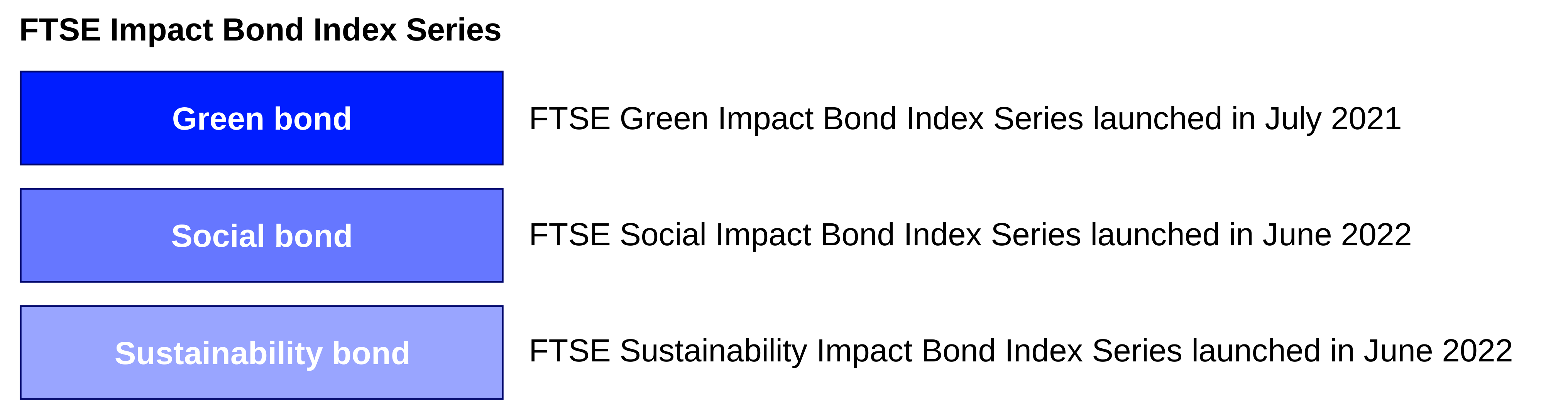
To support investors in this rapidly evolving market, FTSE Russell has developed the FTSE Impact Bond Index Series—a comprehensive suite of benchmarks covering GSS bonds with transparency, comparability and consistent classification (Figure 3).
Figure 3. FTSE Impact Bond Index Series
Source: FTSE Russell. Past performance is not a guide to future returns. Please see the end for important legal disclosures.
A key differentiator of the index series is its focus on methodological rigour, transparent rules and alignment with leading market standards. Green bonds are identified using the Climate Bonds Initiative’s (CBI’s) screening criteria to ensure the credibility and robustness of their green credentials, while social and sustainability bonds must comply with ICMA Principles and Guidelines.
Social and sustainability bonds are also subject to validation at both issuance and post-issuance stages, with ongoing monitoring to confirm that proceeds are allocated as intended—reinforcing accountability and helping to strengthen market trust.
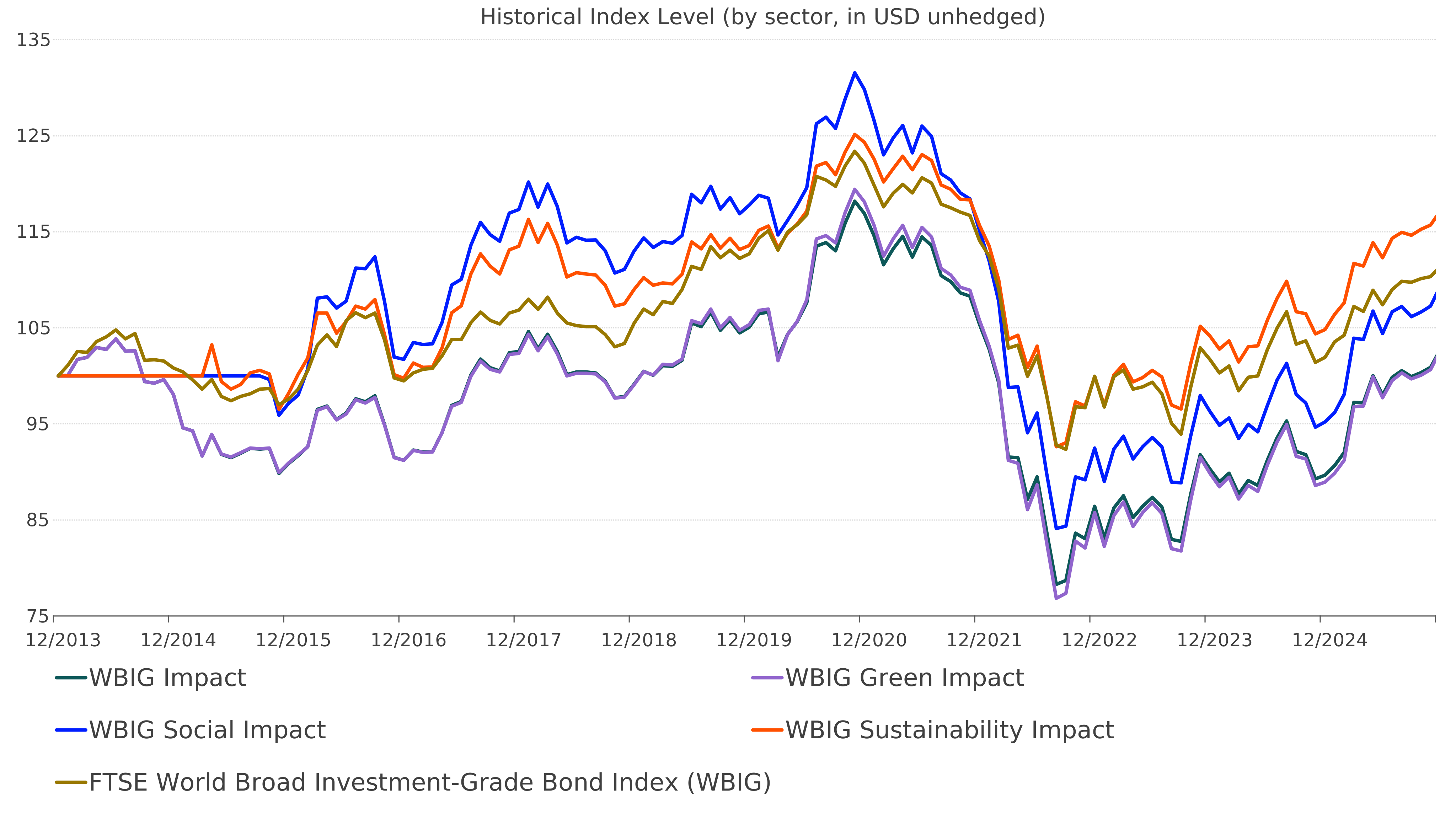
The indices also enable investors to track the performance of labelled bonds (Figure 4). Historically, impact bond segments have performed broadly in line with conventional fixed income markets. However, it is noteworthy that the relative performance of impact bond portfolios has generally been more sensitive to interest rate increases, due to these bonds’ higher active duration profiles, which in turn is underpinned by a higher concentration of long-duration government green bonds.
Figure 4. FTSE Impact Bond Index Series performance
Source: FTSE Russell, data as of February 28, 2026. Past performance is no guarantee of future results. Charts and graphs are provided for illustrative purposes only. Index and/or rate returns shown may not represent the results of the actual trading of investable assets. Certain returns shown may reflect back-tested performance. All performance presented prior to the index or rate inception date is back-tested performance. Back-tested performance is not actual performance, but is hypothetical. The back-test calculations are based on the same methodology that was in effect when the index or rate was officially launched. However, back-tested data may reflect the application of the index or rate methodology with the benefit of hindsight, and the historic calculations of an index or rate may change from month to month based on revisions to the underlying economic data used in the calculation of the index or rate. Past performance is not a guide to future returns. Please see the end for important legal disclosures.
As the labelled bond market continues to evolve, credible and transparent benchmarks are essential. Explore the FTSE Impact Bond Index Series to see how benchmarks can support standards-aligned integration of the labelled bond markets. Access the solution overview, review the index ground rules, or contact our team to discuss how these benchmarks can support your sustainable fixed income strategies.

Sources
[1] Note: throughout this blog, we use ‘labelled bonds’, ‘GSS bonds’ and ‘impact bonds’ interchangeably to reflect common market usage. | Back to Note 1
[2] Issuance figures exclude US municipal bonds. | Back to Note 2

Disclaimer
© [2026] London Stock Exchange Group plc and its applicable group undertakings (“LSEG”). LSEG includes (1) FTSE International Limited (“FTSE”), (2) Frank Russell Company (“Russell”), (3) FTSE Global Debt Capital Markets Inc. “FTSE Canada”, (4) FTSE Fixed Income LLC (“FTSE FI”), (5) FTSE (Beijing) Consulting Limited (“WOFE”), (6) FTSE EU SAS ("FES"). All rights reserved.
FTSE Russell® is a trading name of FTSE, Russell, FTSE Canada, FTSE FI, WOFE, FTSE EU and other LSEG entities providing LSEG Benchmark and Index services. “FTSE®”, “Russell®”, “FTSE Russell®”, “FTSE4Good®”, “ICB®”, “Refinitiv”, “WMR™” “FR™” and all other trademarks and service marks used herein (whether registered or unregistered) are trademarks and/or service marks owned or licensed by the applicable member of LSEG or their respective licensors.
FTSE International Limited is authorised as a Benchmark Administrator and regulated in the United Kingdom (UK) by the Financial Conduct Authority ("FCA") according to the UK Benchmark Regulation, FCA Reference Number 796803. FTSE EU SAS is authorised as Benchmark Administrator and regulated in the European Union (EU) by the Autorité des Marches Financiers (“AMF”) according to the EU Benchmark Regulation.
All information is provided for information purposes only. All information and data contained in this publication is obtained by LSEG, from sources believed by it to be accurate and reliable. Because of the possibility of human and mechanical inaccuracy as well as other factors, however, such information and data is provided "as is" without warranty of any kind. No member of LSEG nor their respective directors, officers, employees, partners or licensors make any claim, prediction, warranty or representation whatsoever, expressly or impliedly, either as to the accuracy, timeliness, completeness, merchantability of any information or LSEG Products, or of results to be obtained from the use of LSEG products, including but not limited to indices, rates, data and analytics, or the fitness or suitability of the LSEG products for any particular purpose to which they might be put. The user of the information assumes the entire risk of any use it may make or permit to be made of the information.
No responsibility or liability can be accepted by any member of LSEG nor their respective directors, officers, employees, partners or licensors for (a) any loss or damage in whole or in part caused by, resulting from, or relating to any inaccuracy (negligent or otherwise) or other circumstance involved in procuring, collecting, compiling, interpreting, analysing, editing, transcribing, transmitting, communicating or delivering any such information or data or from use of this document or links to this document or (b) any direct, indirect, special, consequential or incidental damages whatsoever, even if any member of LSEG is advised in advance of the possibility of such damages, resulting from the use of, or inability to use, such information.
No member of LSEG nor their respective directors, officers, employees, partners or licensors provide investment advice and nothing in this document should be taken as constituting financial or investment advice. No member of LSEG nor their respective directors, officers, employees, partners or licensors make any representation regarding the advisability of investing in any asset or whether such investment creates any legal or compliance risks for the investor. A decision to invest in any such asset should not be made in reliance on any information herein. Indices and rates cannot be invested in directly. Inclusion of an asset in an index or rate is not a recommendation to buy, sell or hold that asset nor confirmation that any particular investor may lawfully buy, sell or hold the asset or an index or rate containing the asset. The general information contained in this publication should not be acted upon without obtaining specific legal, tax, and investment advice from a licensed professional.
Past performance is no guarantee of future results. Charts and graphs are provided for illustrative purposes only. Index and/or rate returns shown may not represent the results of the actual trading of investable assets. Certain returns shown may reflect back-tested performance. All performance presented prior to the index or rate inception date is back-tested performance. Back-tested performance is not actual performance, but is hypothetical. The back-test calculations are based on the same methodology that was in effect when the index or rate was officially launched. However, back-tested data may reflect the application of the index or rate methodology with the benefit of hindsight, and the historic calculations of an index or rate may change from month to month based on revisions to the underlying economic data used in the calculation of the index or rate.
This document may contain forward-looking assessments. These are based upon a number of assumptions concerning future conditions that ultimately may prove to be inaccurate. Such forward-looking assessments are subject to risks and uncertainties and may be affected by various factors that may cause actual results to differ materially. No member of LSEG nor their licensors assume any duty to and do not undertake to update forward-looking assessments.
No part of this information may be reproduced, stored in a retrieval system or transmitted in any form or by any means, electronic, mechanical, photocopying, recording or otherwise, without prior written permission of the applicable member of LSEG. Use and distribution of LSEG data requires a licence from LSEG and/or its licensors.