David Wilson
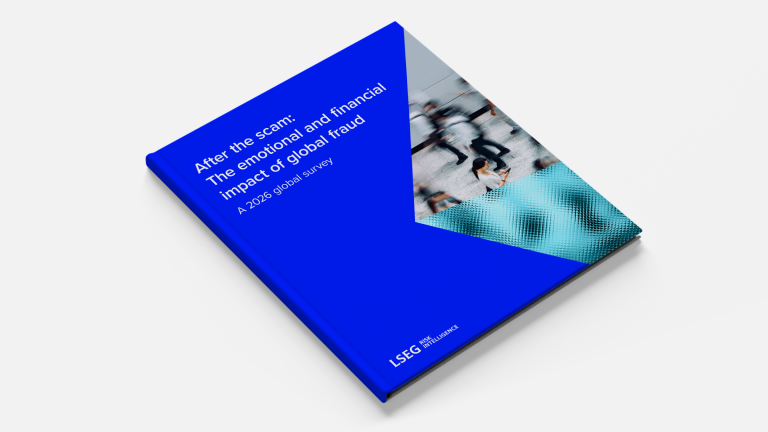
Drawing on a global survey of 21,000 adults, our new global research explores how fraud is experienced today’s digital economy. It explores not only how scams are rising in scale and sophistication, but how their impact is felt. While the findings point to a sharp global increase in fraud, the deeper story lies beyond the statistics. Fraud is not just a financial crime – it is a human one. Every transaction tells a story, and the damage extends far beyond money lost.
The emotional toll of financial scams
The emotional and behavioural damage caused by fraud is long lasting, with victims experiencing anger, frustration, embarrassment and shame, according to our global research survey, which unpacks the responses of individual consumers about their personal experiences of financial scams – from impersonation to investment and payment scams, and from phishing to QR code based fraud, deepfakes and much more.
Financial scams have become one of the defining risks of the digital age and are now a global, mainstream threat that undermines trust in financial institutions and leaves a lasting emotional impact on its victims.
LSEG Risk Intelligence global survey: After the scam: The emotional and financial impact of global fraud
After experiencing fraud, 97% of those affected change how they behave, often becoming more cautious online or avoiding certain channels.
The ripple effects of such changes are hard to quantify – but they amplify individual loss, hinder digital growth and undermine the bedrock of trust in the global financial ecosystem.
As scams surge, the fraud economy grows
Scams and fraud are rising sharply worldwide – and respondents are highly aware of this, with 71% of adults globally saying they believe financial scams are increasing.
Whilst this concern is highest in markets like Australia, France and the UK, the surging scam industry targets victims across markets – and also age groups – using ever-more sophisticated techniques: so sophisticated that 15% of victims say they took over a year to realise they’d been scammed.
One in nine adults worldwide has suffered a direct loss in just two years.
LSEG Risk Intelligence global survey: After the scam: The emotional and financial impact of global fraud
Phishing, impersonation and payment scams top the list, but the continued rise of AI-generated images, voice clones and deepfakes is undeniable.
The clever use of AI is complicating the landscape in myriad ways. Scams today are highly professional looking and, surprisingly, they often claim victims in the digital-first, Gen Z age bracket.
These findings reveal the nuanced nature of the impact of fraud across generations. Baby Boomers are highly targeted, but in reality, are less likely to become victims. In contrast, our report finds that younger generations are over-exposed to digital scams – and more likely to lose money: 32% of targeted Boomers report losing money, as opposed to 49% of Gen Z and 47% of Millennials.
Responsibility offers opportunity
While many individuals are trying to protect themselves, gaps nonetheless remain.
Interestingly, generational differences in the safety concerns adopted are strongly evident. Older generations are consistently more likely to take precautions – such as using strong passwords and multifactor authentication – than younger generations.
Of particular concern is that just 13% of respondents fully understand the protections or reimbursements they are entitled to if they are scammed. A notable 28% are unaware of any protections at all.
This translates into a clear responsibility on the part of the global financial industry – to not only strengthen defences, but also to protect customers through better communication and enhanced education.
Banks, payment processors, fintechs and technology providers have made substantial progress in strengthening fraud detection, prevention and customer protection. The ongoing opportunity – and responsibility – now is to continue advancing these efforts.

Legal Disclaimer
Republication or redistribution of LSEG content is prohibited without our prior written consent.
The content of this publication is for informational purposes only and has no legal effect, does not form part of any contract, does not, and does not seek to constitute advice of any nature and no reliance should be placed upon statements contained herein. Whilst reasonable efforts have been taken to ensure that the contents of this publication are accurate and reliable, LSEG does not guarantee that this document is free from errors or omissions; therefore, you may not rely upon the content of this document under any circumstances and you should seek your own independent legal, investment, tax and other advice. Neither We nor our affiliates shall be liable for any errors, inaccuracies or delays in the publication or any other content, or for any actions taken by you in reliance thereon.
Copyright © 2025 London Stock Exchange Group. All rights reserved.
The content of this publication is provided by London Stock Exchange Group plc, its applicable group undertakings and/or its affiliates or licensors (the “LSE Group” or “We”) exclusively.
Neither We nor our affiliates guarantee the accuracy of or endorse the views or opinions given by any third party content provider, advertiser, sponsor or other user. We may link to, reference, or promote websites, applications and/or services from third parties. You agree that We are not responsible for, and do not control such non-LSE Group websites, applications or services.
The content of this publication is for informational purposes only. All information and data contained in this publication is obtained by LSE Group from sources believed by it to be accurate and reliable. Because of the possibility of human and mechanical error as well as other factors, however, such information and data are provided "as is" without warranty of any kind. You understand and agree that this publication does not, and does not seek to, constitute advice of any nature. You may not rely upon the content of this document under any circumstances and should seek your own independent legal, tax or investment advice or opinion regarding the suitability, value or profitability of any particular security, portfolio or investment strategy. Neither We nor our affiliates shall be liable for any errors, inaccuracies or delays in the publication or any other content, or for any actions taken by you in reliance thereon. You expressly agree that your use of the publication and its content is at your sole risk.
To the fullest extent permitted by applicable law, LSE Group, expressly disclaims any representation or warranties, express or implied, including, without limitation, any representations or warranties of performance, merchantability, fitness for a particular purpose, accuracy, completeness, reliability and non-infringement. LSE Group, its subsidiaries, its affiliates and their respective shareholders, directors, officers employees, agents, advertisers, content providers and licensors (collectively referred to as the “LSE Group Parties”) disclaim all responsibility for any loss, liability or damage of any kind resulting from or related to access, use or the unavailability of the publication (or any part of it); and none of the LSE Group Parties will be liable (jointly or severally) to you for any direct, indirect, consequential, special, incidental, punitive or exemplary damages, howsoever arising, even if any member of the LSE Group Parties are advised in advance of the possibility of such damages or could have foreseen any such damages arising or resulting from the use of, or inability to use, the information contained in the publication. For the avoidance of doubt, the LSE Group Parties shall have no liability for any losses, claims, demands, actions, proceedings, damages, costs or expenses arising out of, or in any way connected with, the information contained in this document.
LSE Group is the owner of various intellectual property rights ("IPR”), including but not limited to, numerous trademarks that are used to identify, advertise, and promote LSE Group products, services and activities. Nothing contained herein should be construed as granting any licence or right to use any of the trademarks or any other LSE Group IPR for any purpose whatsoever without the written permission or applicable licence terms.