

Debajit Saha
As the FIFA World Cup kicks off this week, attention is firmly on the players, teams and the global spectacle of football’s biggest tournament. Yet behind the scenes, another story has been unfolding – one driven not by sport, but by markets.
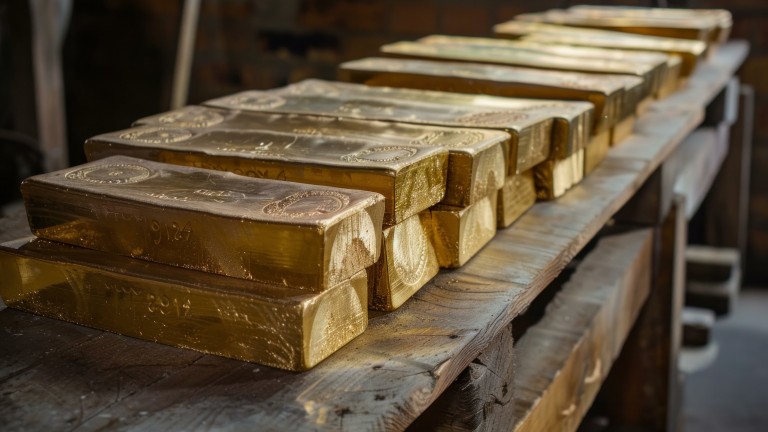
According to LSEG analysis, the gold value of the FIFA World Cup trophy has surged by more than 150% since the last tournament in 2022. Today, the trophy’s gold content alone is worth approximately $713,000, up from around $277,000 just four years ago.
While the trophy itself is ultimately priceless to the players who lift it, its rising melt value offers a striking illustration of how sharply gold prices have increased in recent years – and why the metal continues to play a central role in periods of uncertainty.
A trophy shaped as much by markets as by legacy
The current FIFA World Cup trophy, first introduced in 1974, is crafted from 18-carat gold and contains 4.93 kilograms of pure gold. When it was created, its material value was estimated at around $25,000. Today, that figure has increased nearly thirtyfold.
This dramatic rise reflects broader trends in the gold market. In recent years, prices have climbed as investors have sought safe-haven assets amid geopolitical tensions, trade uncertainty and signs of slowing global growth.
In this sense, one of sport’s most iconic symbols has also become a real-time reflection of global economic sentiment.
Although gold has eased from its recent highs, the long-term trend in its value remains remarkable. The FIFA World Cup trophy is ultimately priceless to the players who lift it, but its gold content offers a useful reminder of how dramatically the value of the precious metal has increased over time.
Debajit Saha
Why the World Cup trophy stands apart
Among major sporting prizes, the FIFA World Cup trophy is unique. It is the only globally recognised trophy crafted primarily from gold – a key reason its intrinsic value far exceeds that of other major competitions.
By contrast, the trophies awarded to winners of the UEFA Champions League and UEFA Europa League are made from sterling silver. As a result, their melt values are significantly lower, currently estimated at around $16,950 and $22,600 respectively.
This distinction highlights the role material composition plays in determining overall value – and why the World Cup trophy remains in a class of its own from both a sporting and financial perspective.
A different picture in American sport
The same dynamic is visible in the United States, where some of the most recognisable sporting trophies are also valued according to their metal content – albeit using silver rather than gold.
The Borg-Warner Trophy, awarded to the winner of the Indianapolis 500, is one of the largest in global sport. Standing 1.62 metres tall and containing around 69 kilograms of sterling silver, it has a melt value of approximately $156,000, making it the most valuable of the major American sports trophies.
Elsewhere, the Woodlawn Vase, presented at the Preakness Stakes, carries a melt value of around $24,860, while the Vince Lombardi Trophy – awarded to Super Bowl champions – is worth approximately $7,230 based on its silver content. Unlike many other trophies, a new Lombardi Trophy is made each year.
More than symbolism: What this tells us about gold markets
The rising value of the World Cup trophy offers a useful lens through which to understand the behaviour of gold markets.
Gold has long been viewed as a store of value, particularly during periods of macroeconomic uncertainty. Its recent performance reflects a combination of factors, including central bank demand, inflation concerns and geopolitical risk.
What makes the World Cup trophy particularly compelling as an example is its visibility. Unlike bullion or financial instruments, it is instantly recognisable – making it a powerful illustration of otherwise abstract market movements.
Where sport meets markets
While the financial value of these trophies will never rival their emotional or cultural significance, their underlying materials provide a tangible link between global markets and global sport.
With no other major sporting trophy crafted from gold, the FIFA World Cup trophy stands unrivalled in intrinsic value. While every trophy carries its own prestige and history, the World Cup trophy remains unique in combining sporting significance with the enduring value of gold.
Debajit Saha

Legal Disclaimer
Republication or redistribution of LSEG content is prohibited without our prior written consent.
The content of this publication is for informational purposes only and has no legal effect, does not form part of any contract, does not, and does not seek to constitute advice of any nature and no reliance should be placed upon statements contained herein. Whilst reasonable efforts have been taken to ensure that the contents of this publication are accurate and reliable, LSEG does not guarantee that this document is free from errors or omissions; therefore, you may not rely upon the content of this document under any circumstances and you should seek your own independent legal, investment, tax and other advice. Neither We nor our affiliates shall be liable for any errors, inaccuracies or delays in the publication or any other content, or for any actions taken by you in reliance thereon.
Copyright © 2025 London Stock Exchange Group. All rights reserved.
The content of this publication is provided by London Stock Exchange Group plc, its applicable group undertakings and/or its affiliates or licensors (the “LSE Group” or “We”) exclusively.
Neither We nor our affiliates guarantee the accuracy of or endorse the views or opinions given by any third party content provider, advertiser, sponsor or other user. We may link to, reference, or promote websites, applications and/or services from third parties. You agree that We are not responsible for, and do not control such non-LSE Group websites, applications or services.
The content of this publication is for informational purposes only. All information and data contained in this publication is obtained by LSE Group from sources believed by it to be accurate and reliable. Because of the possibility of human and mechanical error as well as other factors, however, such information and data are provided "as is" without warranty of any kind. You understand and agree that this publication does not, and does not seek to, constitute advice of any nature. You may not rely upon the content of this document under any circumstances and should seek your own independent legal, tax or investment advice or opinion regarding the suitability, value or profitability of any particular security, portfolio or investment strategy. Neither We nor our affiliates shall be liable for any errors, inaccuracies or delays in the publication or any other content, or for any actions taken by you in reliance thereon. You expressly agree that your use of the publication and its content is at your sole risk.
To the fullest extent permitted by applicable law, LSE Group, expressly disclaims any representation or warranties, express or implied, including, without limitation, any representations or warranties of performance, merchantability, fitness for a particular purpose, accuracy, completeness, reliability and non-infringement. LSE Group, its subsidiaries, its affiliates and their respective shareholders, directors, officers employees, agents, advertisers, content providers and licensors (collectively referred to as the “LSE Group Parties”) disclaim all responsibility for any loss, liability or damage of any kind resulting from or related to access, use or the unavailability of the publication (or any part of it); and none of the LSE Group Parties will be liable (jointly or severally) to you for any direct, indirect, consequential, special, incidental, punitive or exemplary damages, howsoever arising, even if any member of the LSE Group Parties are advised in advance of the possibility of such damages or could have foreseen any such damages arising or resulting from the use of, or inability to use, the information contained in the publication. For the avoidance of doubt, the LSE Group Parties shall have no liability for any losses, claims, demands, actions, proceedings, damages, costs or expenses arising out of, or in any way connected with, the information contained in this document.
LSE Group is the owner of various intellectual property rights ("IPR”), including but not limited to, numerous trademarks that are used to identify, advertise, and promote LSE Group products, services and activities. Nothing contained herein should be construed as granting any licence or right to use any of the trademarks or any other LSE Group IPR for any purpose whatsoever without the written permission or applicable licence terms.