Ahead of the curve podcast

SRTs, NBFIs, and Regulatory Focus? What’s Driving the Momentum

Overview

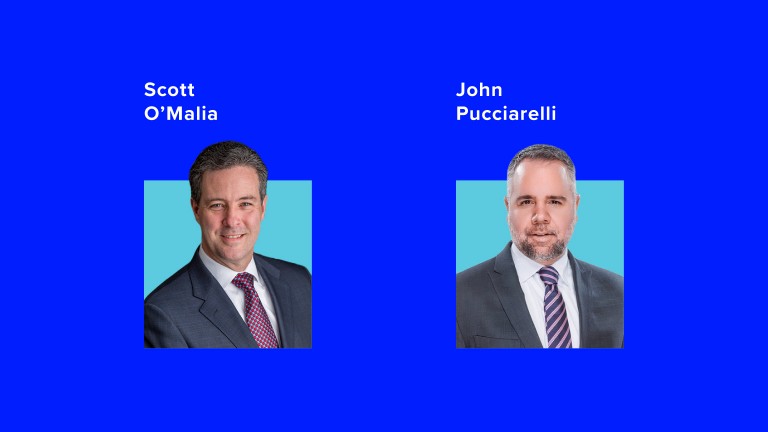
In this episode, we explore the fast‑growing world of Synthetic Risk Transfers (SRTs) what they are, how they work, and why they have become an important capital optimisation tool for banks. Host John Pucciarelli is joined by Stuart Smith to break down why SRTs are gaining momentum, how they differ from pre‑crisis structured products, and where demand from pension funds, credit investors, and other institutional buyers is coming from.

We discuss the key drivers behind the rise of SRTs, including banks’ need to manage RWA and expand lending capacity, and examine the risks involved. From information asymmetry and rollover/liquidity risk to broader transparency challenges. The conversation also highlights why regulators are sharpening their focus on this market and how SRTs fit into the wider discussion around non‑bank financial institutions (NBFIs), interconnectedness, and the push for greater reporting and visibility across the financial system.

This episode offers a grounded look at a rapidly evolving space and what it means for banks, investors, and regulators.

Listen to the podcast

Hello everyone, and welcome to another episode of LSEG Post TradeSolutions: Ahead of the Curve. I'm John Pucciarelli.I will be your host again. synthetic risk transfers is what we're gonna be talking about today.It's been getting a lot ofinterest in the industry of late. Some of you who are listening tothis may have seen it in industry papers, maybe some of your clients have beentalking about it. It is something that has piqued our interest as well, andso we're gonna talk about that today.If you don't know what a synthetic risk transfer is, or an SRT,which is what we're gonna probably reference to, to make it a loteasier, I have with me today, mycolleague, Co-head of business development, Stuart Smith.Stuart, welcome back. Again, we've done thesepodcasts before. This is your first time in New York.First time in New York.This is the New York-Nice to be here.Yeah, this is the New York, version of, the podcaststudio, so it's, good to be here. We've done a few podcasts here.A few, yeah.So it's a really nice comfortable space.Hopefully you're feeling comfortable today.Synthetic risk transfers. Why don't we just jumpright into it? Um, explain what they are.What, what do you mean-Yepwhile we're talking about that, and we can get into the detail of how firms areusing these, and then we can start divinginto their purpose, their useYepand why it's important to us and why we're talking about it today.Sure.So what's an SRT?So fundamentally, it's not a single transaction, but it's a way in which abank is able to move some of their counterparty credit risk awayfrom themselves and deposit that with a new investor.Mm-hmm.And they can, for delivering that, essentially an insurance contract, theycan receive back a premium, and that premium makes it worththeir while to, to move this around.Okay.And that gives them more flexibility about how they run theirbusiness, which is kind of interesting, especially with some of the new constraintsthat banks find themselves under.So this is, this sounds different, but it doesn't sound brandnew, right? We've seen these before.why, is it becoming so significant now?I mean, it sounds like this is an insurance policy, right?I know there's capital implications.The banks are holding the risk though, yeah?and the buyers, aregaining the yield on, on whatever it is.But like, why is it significant, and can you just explain, like give us anexample of aYeahof a specific product that, you know, might, firms might beinvesting in nowYeahas a CRT? An SRT rather.So probably, probably the biggest way that this is happening right now, so you'relooking at banks who are issuing corporate loans.That corporate loan market is really attractive to a whole bunch of,investors who see the higher yield they can get through that-Mmbut also know it's a really tough market to get into.It's a market where you value local presence, you value local knowledge.All the infrastructure banks have built up, you know, to take on good loans andmanage those good loans, that's expensive to do.Mm-hmm.That's not something a pension fund or a hedge fund really wants to invest in anddo. They do find the yield attractive, though.Yeah.So essentially what you're able to do is the bank is able to move part of therisk from their book to theinvestor, and the investor, you know, is taking thatand receiving a premium from the bank every month, say, for takingon that risk.Mm-hmm.And the key thing for the bank is it reduces their RWA.So it reduces their risk-weighted assets that they then have tohold, and that is quite commonly now the limiting factor on theactivity that a bank can take on. So a bank may well be in the position wherethey're at the limit based on what they can do based on their assets in terms oftaking on more loans.Mm-hmm.So they've got corporates coming to them saying, "I've got more business for you.Can we do more business?" "No. We're done.I'm at my risk limit."Yep.They can execute one of these transactions, take that risk down, move that riskto people who wanna buy it, and then carry on doing what they're good at in issuingloans and managing them.Okay. I mean, these sound like, CDOs of the past,and we don't wanna get into- We're not gonna compare them towhat caused or potentially caused, the '08crisis. Um, hopefully these are all lessons learned and this isreally just a capital savings, method for banks,right? Uh, like you said, to, to gain more business and, you know,for it to be attractive as a, as an investment tool for, for assetmanagers and hedge funds or even as a, as a hedging tool potentially.Yeah.but how big is this market right now, and do youknow, like,when it started to gain momentum? It seems like it's gaining a lot of momentumbecause we're hearing about them more.Yeah.And I think we'll continue to hear even more about them.I don't think we're breaking ground here, but again, this is something fairlynew. I know, you know, you had mentioned there was a, a Basel paper thatwas written.Yeah. But can-so can you kind of. Like, I know I've thrown a couple things at you there,but, how big, how big is this market and, and, you know, do you know-Yeahlike, where, like how long it's been trading for?So this is really a concept that became, you know, prevalent after the crisis.Yeah.You know, when those, you know, charges came up for the bank, they needed theseoutlets. So you saw this predominantly in Europe and the UKMm-hmmearly days, and the US was a little bit less keen on this, so it tooklonger to, to come to fruition. Um, but really the pacehas really picked up over the last four or five years.AndIs that because of capital? like is it for because offurther capital constraints, ordo you think banks see it as, a way toI mean, is it like all of what we've been talking about in terms of capitaland opportunity, in terms of, you know,being able to finance more corporate loans, et cetera?Like is it a combo of all of that?So I think the fact it became accepted in the US was a big deal around 2004.Mm-hmm.It allowed for big acceleration, but then also that, RWA factor is,is key to many banks now, and that's become the limiting factor on a, on a largenumber of banks, which is, you know, driving them to look for these avenues wherethey can do these risk transfers.Mm-hmm.But when you look at maybe numbers, I mean-Yeahsince, 2016 to2024, I think this market tripled.I think we're now looking at around about 750 billion worth ofassets-Mm-hmmare backed by these kind of insurance policies.That's about 1% of the total assets held by the banks who are, youknow, in this activity in North America and Europe and the UK.Mm-hmm.So this is now a pretty significant part of how banks operate and do theirbusiness, and I think that's what's piqued the interest of regulators.Yeah.You know, they were kind of comfortable with the rules they put in, which maybe wecan talk about, to make sure that it didn't wasn't the same as what happened in2008, to make it a little bit safer.But the fact it's become much bigger than it was four or five years ago is, isjust throwing out some new things that we're thinking about and new risks thatmaybe weren't, weren't fully understood before.Mm-hmm. So 1% doesn't sound huge, butin, I guess, in the grand scheme of it all in aggregate, it's, it's pretty big and,and-Yeahprobably growing, right? Um, I've seen some of those numberstoo. Um, you know, it- I guess it doesn'tmatter, again, to get into the, the, you know, the regulator's mindor, or to deep, deep dive into that.But,you know, we've talked about, and we'll, we'll segue into, a little bit into NBFI,non-bank-Yeahfinancial, intermediaries in a bit.Um, but, you know, any time they- thesenumbers start coming and, and it starts to creep into what they woulddeem significant, they're gonna start writing papers about it.Yeah.They're gonna start to you know, maybe draft kind ofthought pieces around it just to shed a spotlight on it, even though we'renot talking about anything extremely, like, controversialhere. This is, like real legitimate financeand, something that is actually beneficial, rightYeahfor everyone involved for the most part.obviously nothing is without risk, and we can talk a little bit about that too.I think there's a couple of really important things that happened.So why is this not the same as, as CDOs-Yeahwere back in the day? Um, you know, I think a lot of lessons learned,right? So with a CDO, you could completely move that off your balance sheet as abank, and that meant you no longer had skin in the game.Mm-hmm.So if you wrote a poor mortgage and you sold it, you were kind of protected.It wasn't your problem anymore. I think everyone acknowledged this is not-Yeahthis is not the world we wanna be in.Right.So these loans stay with the bank. They, they belong to the bank, and the bankowns them and manages them, and they have to take the first loss on any of theseloan packages.Mm-hmm.So even though they've mitigated some of their risk, the first loss always sitswith the bank. It's what's called the mezzanine level, the in-between amount ofrisk that they get, then gets sold off.That means the bank is still heavily incentivized to make sure they sign goodloansMm-hmmwith good customers and they manage them well-Yeahwhich is what we want banks to do.Yeah.The second thing is, is that these are real underlying assets.Right.During the crisis, we saw a profusion of synthetics, of, of things that werederived on top of underlying assets-Mm-hmmthat made the market much bigger than it actually was in reality.Here, we're strictly talking about loans that really exist, that are out with realpeople. You know, this is not something that's then blowing up into somethingbigger than it actually is.Yeah.So it's very, very different situation to where we were in, in the eve of2008, 2009.Okay. So it's different.Yeah.Sounds better. Banks are. You know, they have skin in the game.They're still holding the risk.Yeah.They're just not holding the capital.They're on, off-loading the capital so that they can, they can gainmore capacity to doYeahmore, more of this business. Um, and it sounds like, you know, it works prettywell, for the most part. What, I mean, what are some of thekey, key risks that investors might takeon when we're talking about these products? Can we talk about that?Yeah. So I think, I mean, I, I love the films that look back at 2008,2009, where they're going through the massive binders of mortgages-Mm-hmmlooking at individual mortgages and deciding which ones were good and bad.You know, it's, it's kind of the same, right?I mean, you are still buying a bundle of loans.Yeah.The bank knows way more about those loans than you do, so there's a real asymmetryof information. So if you're a consumer of these things, if you're an asset managerwho's buying this, you know, the onus is on you to really understand what you'rebuying, make sure that you've done your due diligence and you understand that, andto accept there's always gonna be an asymmetric amount of information.The bank will always know more about these products than you do.So make sure you understand that risk that you're taking on before you, you go intothose transactions.So who'shedge. We talk about hedge funds. Who else is taking on these risks?Who, who else is buying these, and is it mainlyfor yield andreturn? are they using it as just avehicle for that, or is it other, other purposes?And are pension funds, who else?I mean, that's, I mean, it's, it's, it's gotta be about yield.I meanYeahthat's the reason to take on these products.Yeah.You know, it's to achieve those high yields.Banks are effectively paying a premium on their funding rate to have thisfunded in this way because of the reduction in counterparty credit risk that theyget.Mm-hmm.For the pension funds, you know, this is the kind of thing they need.They need, they need that injection of higher yield nowadays to meet theirliabilities, and they have to look around for these kind of products that can dothat.Yeah. So we're talking about family offices, we're talking about pensionfunds, we're talking about-I think it's specialist credit funds.Yeah.But then also some of the bigger pension funds, et cetera, yeahYeahleaning into it quite heavily.So,we talked a little bit about lessons learned and why this is different.Um,you know, I know we've talked about NBFI, and we'll, we'll talk about that, and Ithink this, one of the reasons why we're talking about this topic isbecause it's adjacent to, to that.Yeah.Um, it kind of adds another layer of,focus onto that particular topic aswell. Um, outside of what we spoke about, you know,we're talking about similarities between '08.Um, do you wanna dive a little bit more deeper into that, or you think you coveredmost of, of, most of that already?I think, I think what's, what's interesting and maybe what's similar about it is,is the lack of transparency.Yeah.And I guess that's what a little bit has perked the interest of regulators.Mm-hmm.You know, they can now see something that's relatively large.You know, 1% doesn't sound like a big number.When you think of 1% of all assets in the world, still a chunky piece ofchange.Yeah.And they don't have a lot of transparency into how it's working, who the people whoare buying them are, and how the transactions work.Um, and therefore, you know, I think as a regulator, fundamentally looking atfinancial stability, there's definitely always got to be a risk there thatthey don't understand this. Um, so really, the, the main risk when youlook at it from the bank point of view is maybe a rollover risk.Mm-hmm.So, you know, if liquidity dries up, if assets become at a premiumagain, and the asset managers pull back from these deals,what happens in that situation?Mm-hmm.Um, so could the bank be left holding a loan book bigger than they canafford, and all of a sudden find that that easyaccess to reducing their risk is no longer open to them?Mm-hmm.And this is the, the classic rollover risk.Yep.Um, and that's really the area I think regulators are kind of concerned about, andthat this could turn into a, a place where you could see anexacerbation of a liquidity crisis.Liquidity crisis, you know, pulls back the funding, increasesthe demand from the bank for good assets, further draining away theliquidity.Got it.And I think that's the key thing that regulators are interested in and, andinterested in getting more transparency.And I think that does link back to what we've talked about in the past around howmuch transparency we've got in this space.Right. So that kind of brings us back tothe NBFI talkYeaha little bit. Really, all this is, if you put it simply, isthese are not, this is I would say non-regulatedareas where, where regulators in general are putting a, shining alight on,and they're looking. Like the last time we spoke, we talked aboutconcentration. Um,I know we've spoke about wrong way risk and a few other things.Um, but real quick, I don't want to put you on the spot.NBFI, can you just remind everyone exactly what that is?I know sometimes I hate being, like, youknow, elementary and, and doing things basically-Yeah, yeahbut you never know. Sometimes people are hearing this and they're like, "What'san NBFI?" So hopefully, most people know what that is who's who are listening. But jusNoin case somebodyI meandon't know what that, doesn't know what that is.So NBFI stands for non-bank financial institution.Yeah.So really, any financial institution out there, so anyone who's notbuilding products and selling things is, you know, focusing and dealing inmoneyYeahwho's not a bank, is an NBFI. Which is growing, right? It seems to be growing and growing.Um, you knowYeahI've been reading, we've, we've been reading a lot of different papers and,you know, I'll, I'll, I'll give a plug to ISDA, the ISDA AGM.We're gonna be talking about that onYeahPrime Time and on the big stage.So it's definitely a focus for, for the industry in general.Um,and this is, this is all about, you know, what we're talking abouthere really is just kind of the like transfer, right?It's like capital transfer, risk transfer,over to, you know, these types of entities, and evenlike, I don't even know if the crypto space is part ofthis, but I think it is actually.Yeah, definitely.Um, you know, electronic credit institutions, people who are lendingmoney that aren't banks. Um, I know there's been a shift back and forthb-between, you know, what's happened in Archegos and all these otherthings, but it's still persistent, and it remains, right?Um, you know, how do these things tie together?Does it complicate this whole discussion-Yeahon NBFIs, the, these, these products at all?These SRTs?So I guess, you know, when you're the regulator, what are you looking at?You know, nowadays, they thought they could just regulate the financial industrypost-crisis by regulating the banks.These were viewed as the people who'd messed it up.Let's, let's make them hold more money.They have a big premium, effectively, of cost in their business because they holdthe public's money, and we don't want again to be in a position where we have tobail them out.Mm-hmm.That big cost that we put on those banks has then opened up this space forcompetitors to come in who aren't holding the public's money-Yeahbut are willing to do some of those services that we traditionally associatewith banks. Um, so yeah, this space has grown enormously,and you've got traditional NBFI agents like pension funds.Mm-hmm.Pension funds are still pension funds.Yeah.They're doing what they've always done.They're under some pressure to increase their yield.Um, but then you've got sort of a new breed of, they're swap dealers, wemight call them in the US, under the SEC swap dealer rule, other firms acrossthe globe who are filling a, a non-bank void but doing bank-likeservices. And a, a regulator is definitely, you know, across the globeaware of this and concerned about how that growth might affectfinancial stability. I think not really saying we think it is gonnaaffect financial stability-Mm-hmmjust saying, "You know what? We don't know."Right."We've got a really good handle on the banks.We regulate those guys extremely well.We don't have the same thing in this space."Yeah.So now they're trying to grapple a little bit to understand what that means.What's really interesting about this piece is that it it puts a pretty directlink between the creditworthiness and theprobability of survival of those entities with thebanks. And if we were to see a problem in that entityspace, you then have a direct link to something which the regulators care very muchabout, which is bank stability. And I think that's why they're quite interested tounderstand the size of this-Mm-hmmthe interconnectedness of this, and whether there's any circularity goingon, whether there's any way in which this could form a loop that then coulddrive more, more, more of this business than is really needed.Mm-hmm.Um, so it's, it is important for them to understand.I think it goes into that bigger picture of saying, "How are we going to regulate,or are we going to regulate this NBFI space?And if we do, how are we gonna do it?"Mm-hmm.'Cause it's really not clear how they do that.The FSB paper came out, last year.Mm-hmm.Um, a lot of open questions that sit in there around how you could implement someof the pretty radical things that they proposed within that.Yeah, I mean, look, I'm, I'm guessing this is gonna be atopic that we're gonna continue to talk about for, for a while, especially theNBFI stuff. But this, you know, the, the synthetic risk transferpiece is, I guess sim like somewhat new to me.UmYeahso I wanna thank you for bringing it to my attention, because I was, youknow, I found it interesting kind of just researching up and reading, reading aboutit. Um,In terms of, like, nextsteps or, you know, from your perspective, Stuart, likedo you think this sounds to me like, you know, when you go fromsomething that's opaque to something that's more transparent, to me, it alwaysdefaults to some type of reporting, some kind of disclosures, some typeof regime, that is going tocompel, maybe in the near future, firms todisclose or disclose more of this.I'm, I'm not aware that there is this part of the, you know, tradereporting. I, I don't know if this is your, your, your realm ofexpertise. I'll ask you anyway. I'm not aware that that's thecase. Um, but if it isn't the case, I guess we canassume that that is maybe something that gets recommendednext. What do you think?I think, yeah, that's definitely the focus, right-Yeahin, in the, in the papers that have come out recently, is talking about how dowe increase the transparency, how do we ask people to do more reporting.There isn't the clarity that maybe there was in the past around adirect line of, this regulator will tell this person to do this, and we covereverybody. It's a little bit more messy now 'cause there are so many differententities potentially involved.Mm-hmm.But definitely transparency reporting is, is where they're looking at.I think what's really interesting, we, we've said in the past about how hard it isto be a regulator.Mm.You know, you can get all the reporting in the world, but making sense of that is,is hard work.Yeah.Actually, really interestingly, agentic AI, I think, is helping some of those guys.So I think we are seeing regulators looking at that and seeing how they can makesense of some of this vast volume of data available to them.So I think a really interesting time, and I think you can, you can bet they willlook for more transparencyYeahparticularly into areas where you can conceive of ways that significant amountsof runway risk could exist in the industry, or direct links between differententities that could drive a liquidity crisis.These are the real hot buttons for, for regulators globally.And yeah, their answer to that is more transparencyYeahso they can apply, apply limits and controls.Yeah. Well, SRTs definitely seem like a legitimate and growing, you know,capital optimizationtool in the toolkit.Yeah.Right? There's a lot of tools in the toolkit.Um,in terms of jurisdictions, like are we talking about, like, basically just Europeand the US, or is thisubiquitous? Is it across, is it in Japan?Like, do we see thisin just as a global thing, or do, is it more of a US thing?So I think predominantly was Europe and the UKYeahwas the real starting point for this.All right. So EU and UK.Yeah. And then the US has been a little bit late to the party-Yeahbut is, is definitely around the fastest growingYeaharea for this.Yeah, it'll be interesting once Basel III in the US comes out, which isimminent. At the time of this recording, we're recording this, it's February of2026.Yeah.I like to go back in time sometimes and look at these recordings.And I always remind myself, "You should put a date on it." Um, and we'vebeen hearing that that's gonna, that's imminent. We keep hearing that word.Um, it'll be interesting to see if that slows this, this type ofinvestment down, or if it accelerates it, right?UmYeahwe'll see. I don't It really depends on how this all shakes out.Anything else to add to this? I mean, this is was, this has been a reallyinteresting conversation for me, and I've definitely learned alot, so thank you. Um, you know, is there anything else that we'vemissed that we wanna kinda hit before we, we closetoday?No. I think that's-Yeahit's a definitely a space to watch.Yeah.Right?Space to watch. Always.And, I think, seeing what the regulators do next withNBFI is gonna be fascinating.Yep.Um, yeah. So let's watch this space and hope to come back in a couple months totalk about it.Yeah, we're definitely gonna come back. We always do that.I like to kind of set, set the table, and then we're gonna come back.The last, podcast we did on, tokenization and AI, we're doing the samething. Uh, so Stuart, thank you so much for joiningme, joining us today. I really enjoyed this conversation.Thank you so much.Thank you.Thank you all again for joining us here on the podcast, onAhead of the Curve. We appreciate your time. Thanks for listening.I hope you enjoyed it. I know I did, and we'll see you again.You can find us, on Spotify, YouTube, and onlseg.com. So again, thank you for joining us, and we'll see you againsoon. Thankyou.

Also available on